BASE and Arup Partner for Innovation

Base Bahay Foundation, Inc. (BASE) and Arup have launched a new collaboration aimed at advancing affordable, sustainable, and disaster-resilient housing solutions in the Philippines and beyond.

The partnership builds on a shared commitment to addressing the urgent housing challenges faced by vulnerable communities, particularly those exposed to climate-related disasters. By combining BASE’s expertise in bamboo-based construction systems with Arup’s global engineering knowledge, the collaboration seeks to strengthen technical innovation and promote scalable, resilient housing models.

A Shared Vision for Resilient Communities

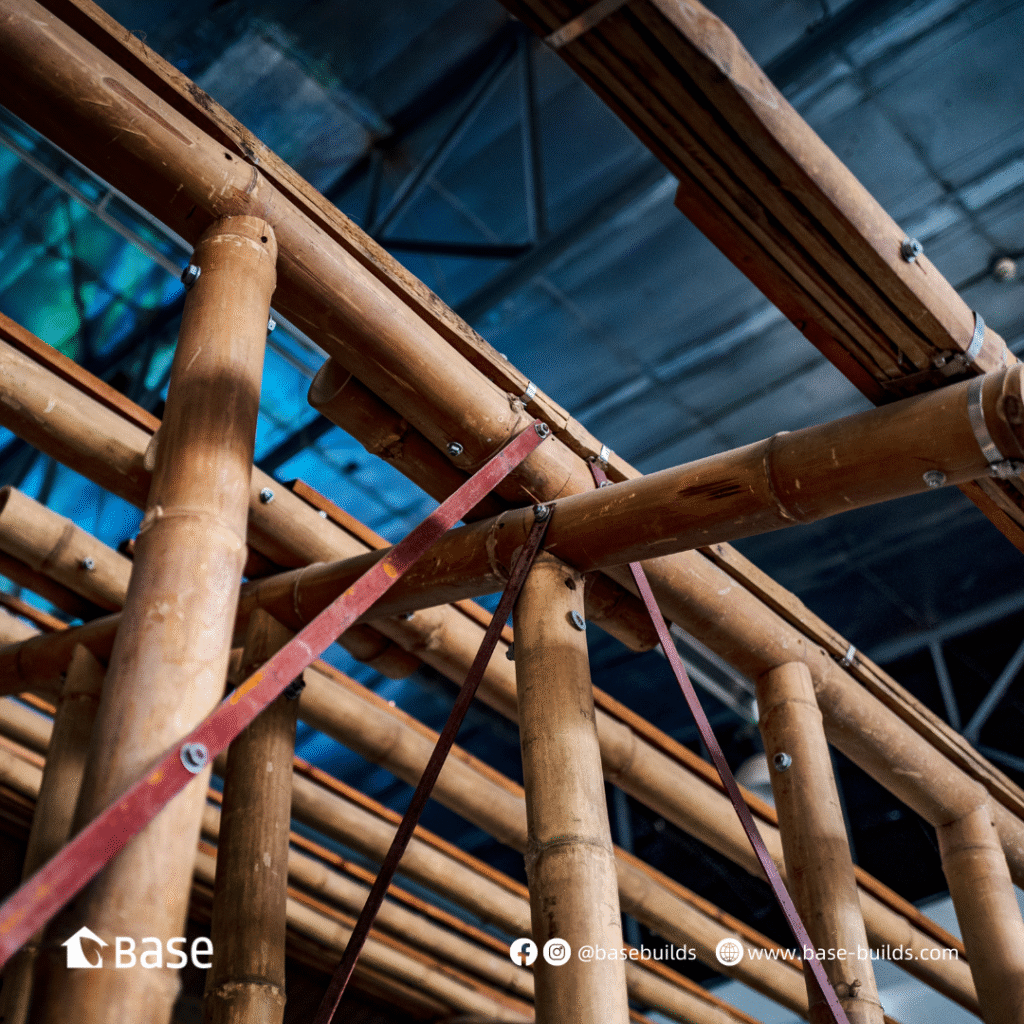
BASE, a non-governmental organization established by the Hilti Foundation, has pioneered the development of bamboo construction technology in the Philippines. Its construction system uses bamboo for structural framing and has been demonstrated to be both environmentally sustainable and disaster-resilient.

Engr. Luis Felipe Lopez, BASE General Manager, highlighted: “This collaboration with Arup marks a significant milestone in Base Bahay’s commitment to advancing bamboo structures as a powerful solution for resilience and sustainability. By uniting our expertise in bamboo-based construction with Arup’s world-class engineering support, we are strengthening the foundations of innovative building systems that can protect communities, withstand disasters, and create a more sustainable future for the Philippines and beyond.”

Arup, an international engineering and design consultancy, has also worked extensively on similar construction systems across Latin America. Both organizations share a history of collaboration through the development of technical guidelines and codes that support safe and effective bamboo housing solutions.

Sebastian Kaminski, Associate from Arup, stated: “With construction contributing towards 40% of global carbon emissions and over 1.6 billion people worldwide living in inadequate homes, we need to develop appropriate, durable, and resilient housing that is also low carbon. Bio-based materials such as bamboo can play an important role in this materials’ transition. We believe that BASE’s work is key to scaling the use of disaster-resilient bamboo housing worldwide. We have always been impressed with how Base works closely with local communities, the number of houses that Base has built, and the very positive influence that BASE has had at a regulatory level.”

This renewed partnership reflects mutual trust and a collective ambition: to accelerate the adoption of sustainable building technologies not only in the Philippines but also in other countries where resilient housing is urgently needed.

Supporting Innovation Through the Material Accelerator Programme

The collaboration is being undertaken as part of Arup’s Material Accelerator Programme (MAP). Through this initiative, Arup provides pro-bono technical support to organizations selected through The Earthshot Prize network, helping innovators scale impactful climate and sustainability solutions.

Under this partnership, Arup will support BASE in further improving its construction system, exploring new innovations, and documenting advancements that can inform wider implementation in countries such as India, Fiji, Nepal, and other developing contexts.

“Arup will leverage its materials, seismic engineering and international development domain experience to continue to support the improvement of the current composite bamboo shear technology in terms of affordability, resilience, durability and embodied carbon. We also plan to work with Base to help standardise and scape this technology worldwide, by engaging with governments, NGOs, UN agencies and regulatory committees,” Kaminski stated.

Building Toward a Sustainable Future

This collaboration represents a significant step forward in the effort to make housing not only affordable but also sustainable, safe, and resilient in the face of increasing climate risks.

By strengthening the technical foundations of bamboo-based construction and supporting innovation through global expertise, Base Bahay and Arup are contributing to a future where more communities can access dignified homes built with local, renewable materials.

“Bringing a new construction technology to the mainstream is challenging, and there are many hurdles. We believe that working closely in partnership with BASE can allow us both to draw on each of our strengths and tackle multiple barriers simultaneously,” Kaminski added.

Together, the partnership demonstrates how engineering, social impact, and sustainability can intersect to create solutions that are scalable, climate-responsive, and transformative.
BASE and HKU District Development Unit (DDU) Partner to Drive Innovation in Sustainable Housing

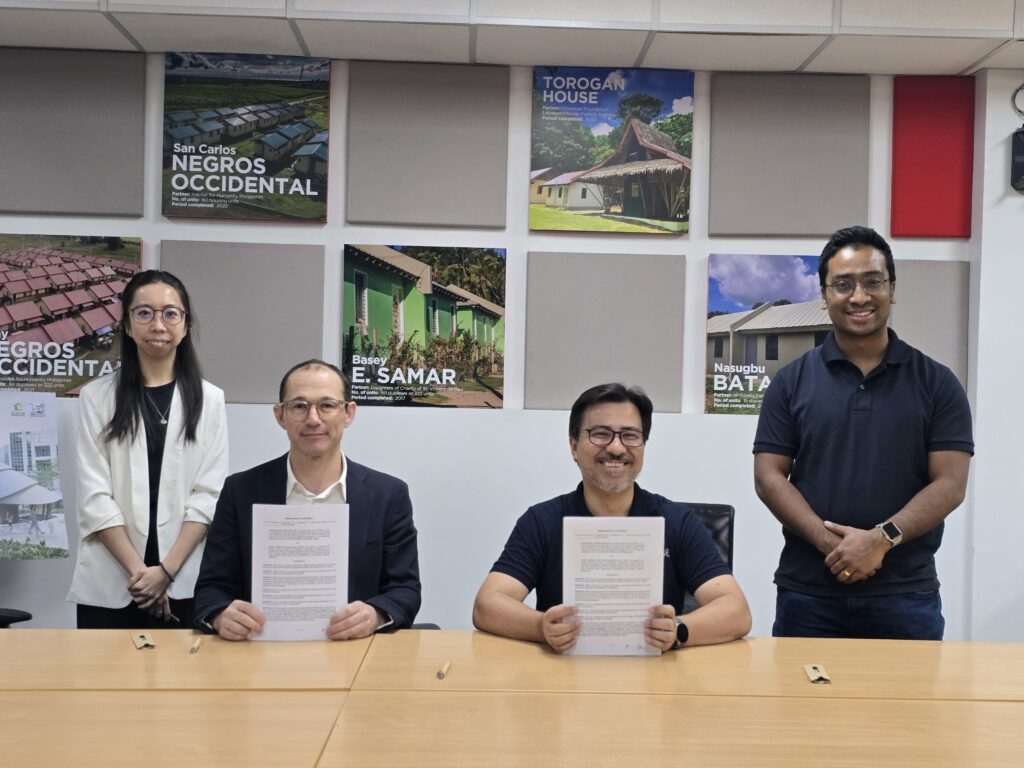
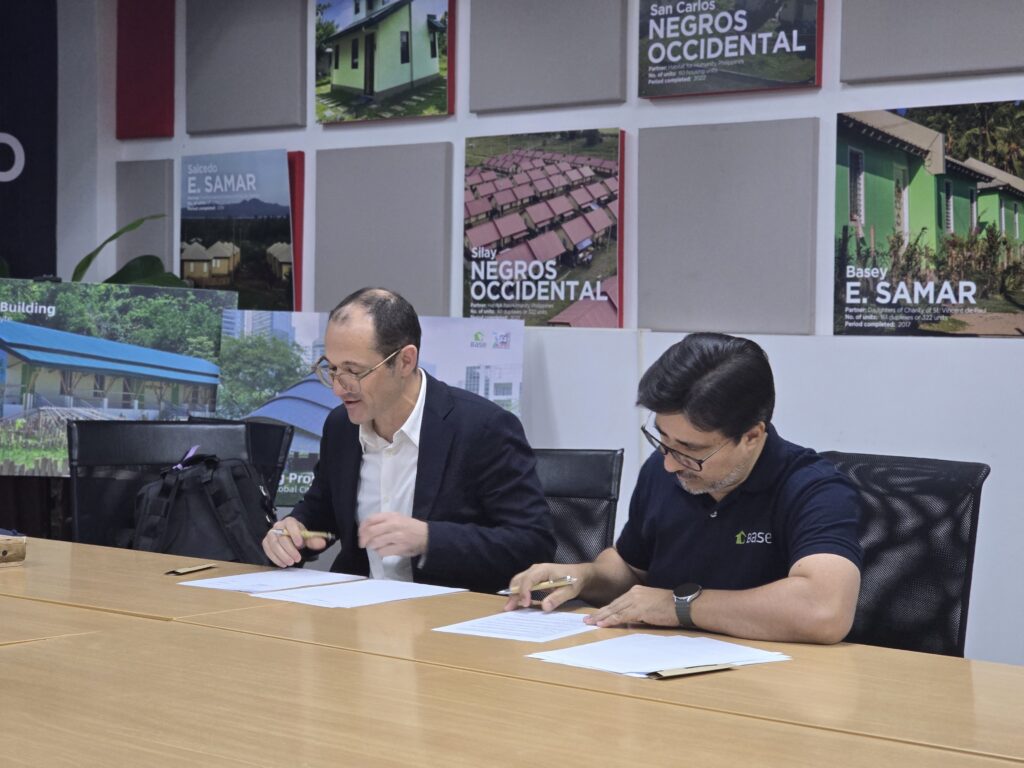
BASE Bahay Foundation, Inc. (BASE) is proud to announce a new partnership with the District Development Unit (DDU) of the University of Hong Kong, formalized through a Memorandum of Agreement.

This collaboration represents a major step toward advancing innovation in affordable and climate-resilient housing for low-income communities in the Philippines.

Innovating the Future of Incremental Housing

The partnership will support BASE’s Incremental Build Project, an initiative that explores how housing can be developed progressively, allowing families to expand and improve their homes over time while ensuring safety, durability, and sustainability from the start.

At its core, the project is an innovative platform for testing new approaches in:

  • Incremental housing design systems
  • Alternative and sustainable construction material
  • Low-cost technologies for resilient communities
  • Research-driven housing solutions that respond to climate risks
  • Advancing Building Technologies and Materials

By combining BASE’s expertise in bamboo construction with DDU’s strength in architectural research and urban innovation, the partnership will accelerate the development of next-generation housing models.

Through this work, BASE and DDU aim to push forward solutions that are not only affordable but also technologically forward-looking and environmentally responsible.

Research Meets Community Impact

This partnership reflects a shared commitment to ensuring that innovation in architecture and construction translates into real-world impact, empowering communities with housing options that are safer, greener, and more resilient.

Together, BASE and DDU envision a future where every family has the opportunity to build a better home and a better life through innovative, step-by-step housing solutions.

Design the Future of Sustainable Housing and See It Built in Bali

What if a home could be affordable, resilient, beautiful, and made entirely from one of the world’s most sustainable materials?

This year, BASE and Bamboo U invite architects, designers, engineers, students, and creative thinkers globally to take on an exciting challenge: reimagine what affordable housing can look like through bamboo innovation.

Welcome to the Bamboo Housing Challenge.

A Global Call for Sustainable Design

The Bamboo Home Challenge is an international design contest seeking bold ideas for a bamboo-based home prototype that can be built for USD 10,000.

This is more than a competition. It is an opportunity to create real solutions for communities in need of affordable, climate-responsive housing.

Organized by BASE and Bamboo U, with support from the Hilti Foundation, the contest encourages designs that are:

  • Affordable and realistic
  • Durable and adaptable
  • Environmentally responsible
  • Rooted in human-centered living
  • Visually inspiring

From Concept to Full-Scale Construction

The winning proposal won’t remain on paper.

The selected design will be built at full scale in Bali, Indonesia, during Bamboo U’s immersive 11-Day Bamboo Build & Design Course in October 2026.

The winner receives:

  • Flights and accommodation for one representative
  • Free participation in the 11-day course (valued at USD 2,775)
  • Opportunity for up to two additional team members to join the course at no extra cost
  • Global recognition through a printed and digital publication featuring top entries

If you have an idea that can reshape sustainable housing, this challenge is for you.

Key Dates to Remember

  • Final Date to Register: March 15, 2026
  • Submission Deadline: April 17, 2026
  • Winner Announcement: May 15, 2026
  • Construction in Bali: October 23 – November 3, 2026

Be Part of the Movement

The Bamboo Housing Challenge is more than a design competition. It is a platform for innovation, sustainability, and meaningful impact.

Your idea could become the next bamboo home prototype, inspiring communities globally.

Bamboo Drives the International Low-Carbon Construction Sector

New design guide is a significant milestone in realising the benefits of bamboo to widen its adoption.

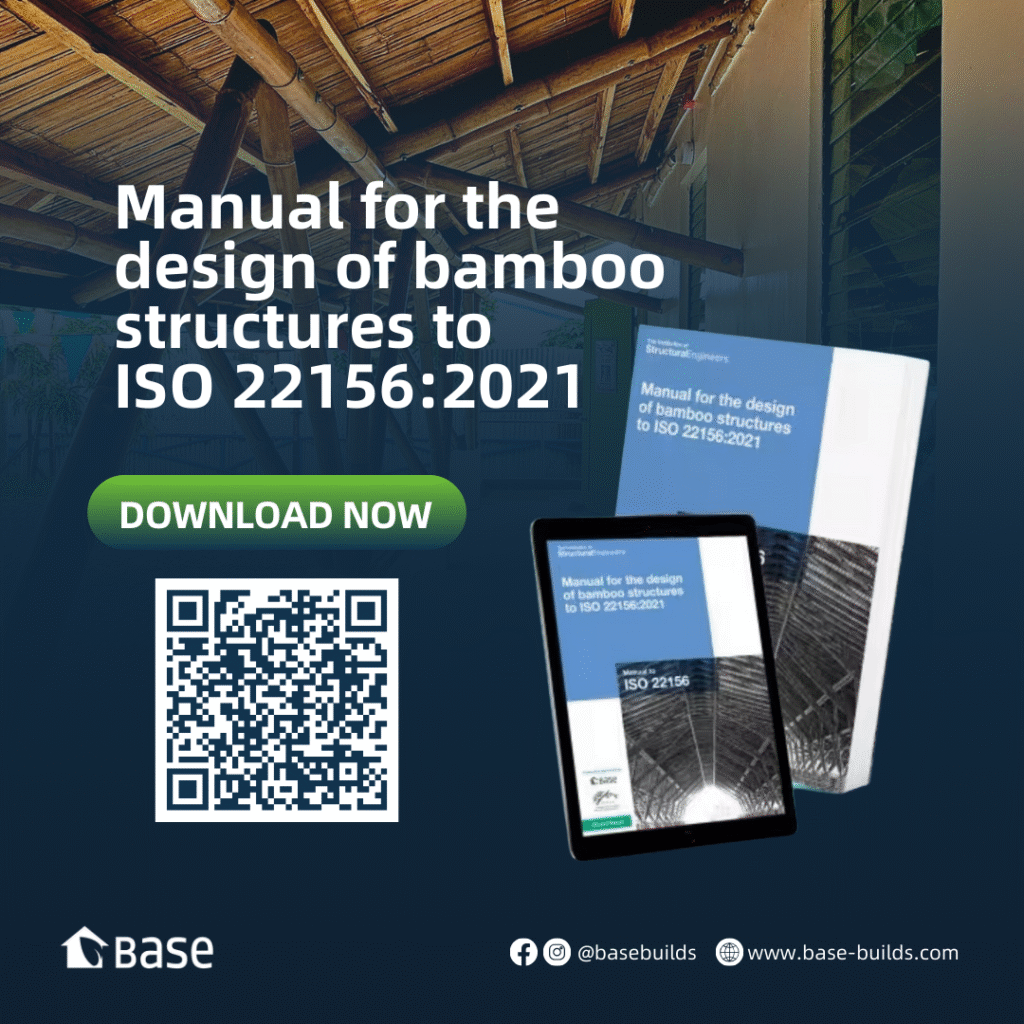
Comprehensive guidance about the design of permanent bamboo structures has been published by the Institution of Structural Engineers (IStructE).

The detailed design manual draws on the expertise of four international authors from academia and industry. They are all members of the INBAR Bamboo Construction Task Force (BCTF), one of the leading international bodies on the structural uses of bamboo:

  • Dr David Trujillo CEng, Assistant Professor in Humanitarian Engineering, School of Engineering at the University of Warwick;
  • Kent Harries PEng, Professor of Structural Engineering and Mechanics, University of Pittsburgh;
  • Sebastian Kaminski CEng, an IStructE Fellow and a structural engineer from consulting firm Arup;
  • and Engr. Luis Felipe Lopez CEng, General Manager of the Base Bahay Foundation Inc. (BASE), which is a guide sponsor with the International Bamboo and Rattan Organization (INBAR).

Manual for the design of bamboo structures to ISO 22156:2021 aims to help structural engineers and other architecture, engineering, and construction (AEC) professionals understand how this prolific bio-based material can be used safely, with the ISO standard and the manual limited to two-storeys because of fire concerns.

Lead author Dr David Trujillio says: “This manual marks a significant milestone for the safe use of bamboo for permanent structures. Most structural design codes are developed in higher-income countries to address their own needs. Only later are they adopted or adapted by lower and middle-income countries – but the starting point is never the needs of those regions.

Professor Kent Harries adds: “There are some 1,600 known species of bamboo. Structurally, it has remarkable mechanical properties. It has also become a very promising bio-based resource, with growing credentials as a sustainable construction material. Nonetheless, this is hugely dependent on designing and building safe and durable structures. Our detailed manual helps to achieve this.”

Sebastian Kaminski explains: “Bamboo has great potential to contribute to a low-carbon construction sector. Bamboo engineering is a very young field compared to mainstream materials and its unique possibilities are increasingly recognised and supported by growing research and innovation. Our manual is structured to support the design engineer along the journey, from sourcing bamboo to detailed design.”

Luis Felipe Lopez highlights: “The construction industry contributes nearly 40% of carbon emissions globally, and bamboo, a regenerative and durable material, is redefining how we build our structures. From being an alternative to a reliable building material, bamboo is now gaining global recognition, and the need for a comprehensive framework is essential to support design engineers and ensure the safe and proper use of bamboo in the built environment, maximising its full potential and environmental advantages.

Kewei Liu, Coordinator of the INBAR Global Bamboo Construction Programme, mentions: “The publication of this guide is of great significance in promoting the application of the current ISO 22156:2021 standard, which has been the most widely accepted international bamboo standard since the 2000s. The authors have made a remarkable contribution to the global use of bamboo construction.”

Bamboo is native to all continents apart from Antarctica and Europe, although numerous species successfully thrive across Europe. Its lifecycle makes it an attractive resource in the context of tackling the global climate emergency, as like trees it fixes carbon in its leaves, stem, roots and surrounding soil. Bamboo’s harvest does not disturb the stored carbon in the soil.

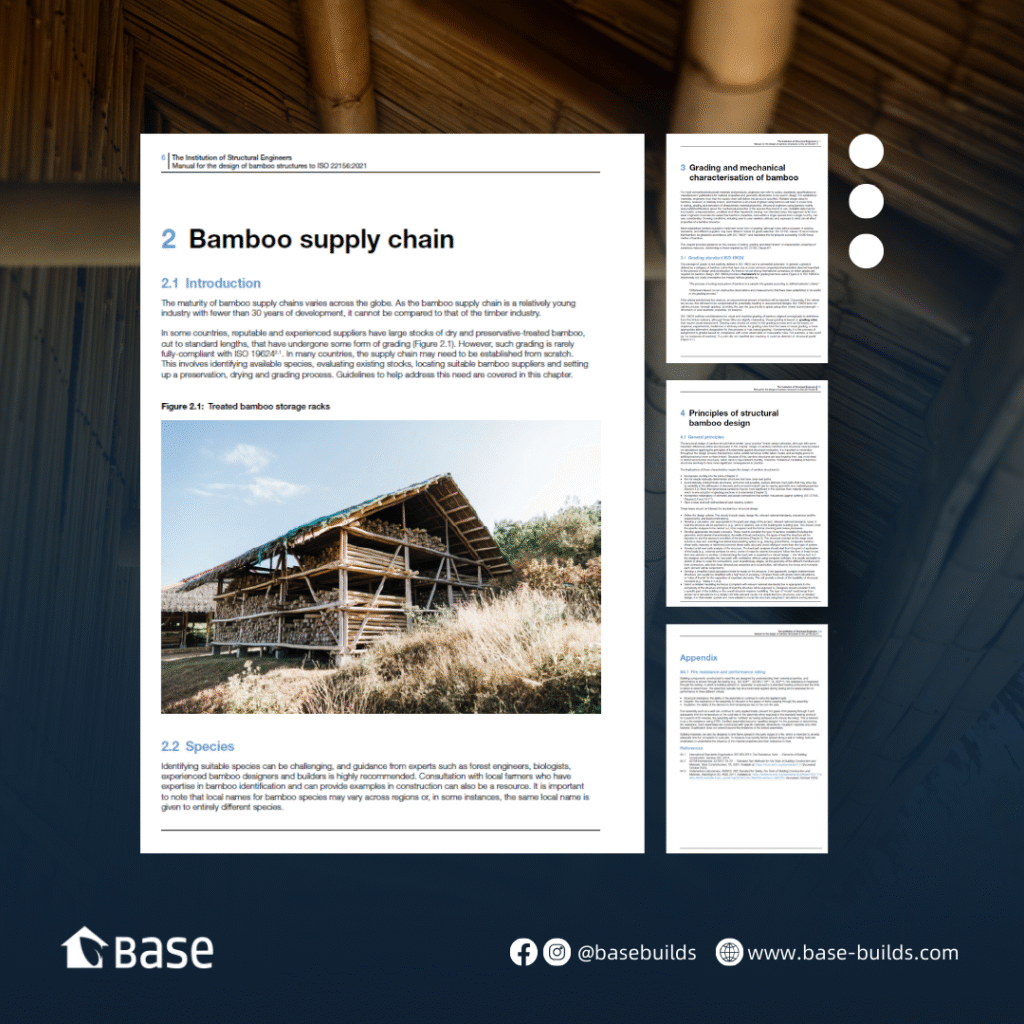
Alongside the four leading authors, the manual was also reviewed by eleven expert reviewers. It has ten chapters covering a wide range of topics including the bamboo supply chain; bamboo project management; grading and mechanical characteristics of bamboo; analysis of bamboo structures; seismic and wind hazard design using bamboo; element and connection design; durability; bamboo structural shear walls; and worked examples of bamboo’s structural use in real-life examples.

Dr David Trujillo concludes: “The guide is published in the wake of the tragic Hong Kong tower block fires. We share condolences for all those impacted, and await the outcome of investigations as we cannot comment on individual cases. However general risk management principles advocate a risk assessment and consideration of use of flame-retardant materials on high rise and closely spaced buildings, along with fire detection and suppression.

“Importantly, and given the wide use of bamboo, this guide sets out provisions for its safe use, including for fire, covering permanent buildings and not scaffolding. Our aim is for this to be a must-use resource for the structural engineer already working with bamboo or considering its use. We also hope it will be a trusted resource for colleagues across the built environment globally, whether in industry or academia.”

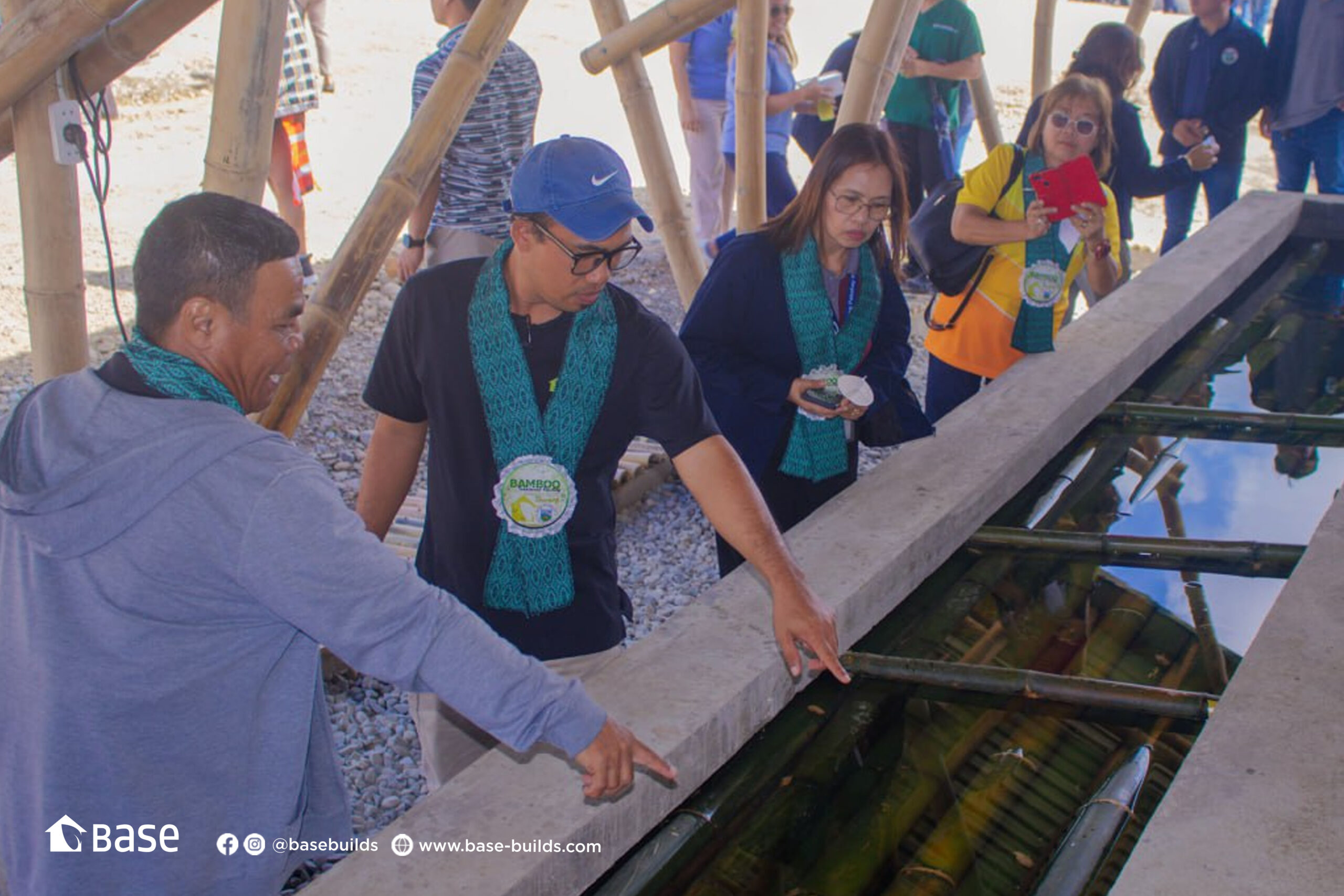
Quezon LGU and BASE Pioneer Sustainable Housing with First Government-Owned Bamboo Treatment Facility

Base Bahay Foundation, Inc. (BASE), a global leader in bamboo construction, and the Local Government of Quezon, Isabela, inaugurated today the first government-owned bamboo treatment facility in the country and the first in Northern Luzon.  This facility, located in Quezon, Isabela, represents a major step forward as the second such facility in Luzon and the eighth nationwide, highlighting the growing national interest in bamboo as a primary building material for socialized housing. 

This landmark partnership, includes not only the treatment facility but also a model house and a prefabrication warehouse, demonstrating a holistic approach to sustainable development and community empowerment.

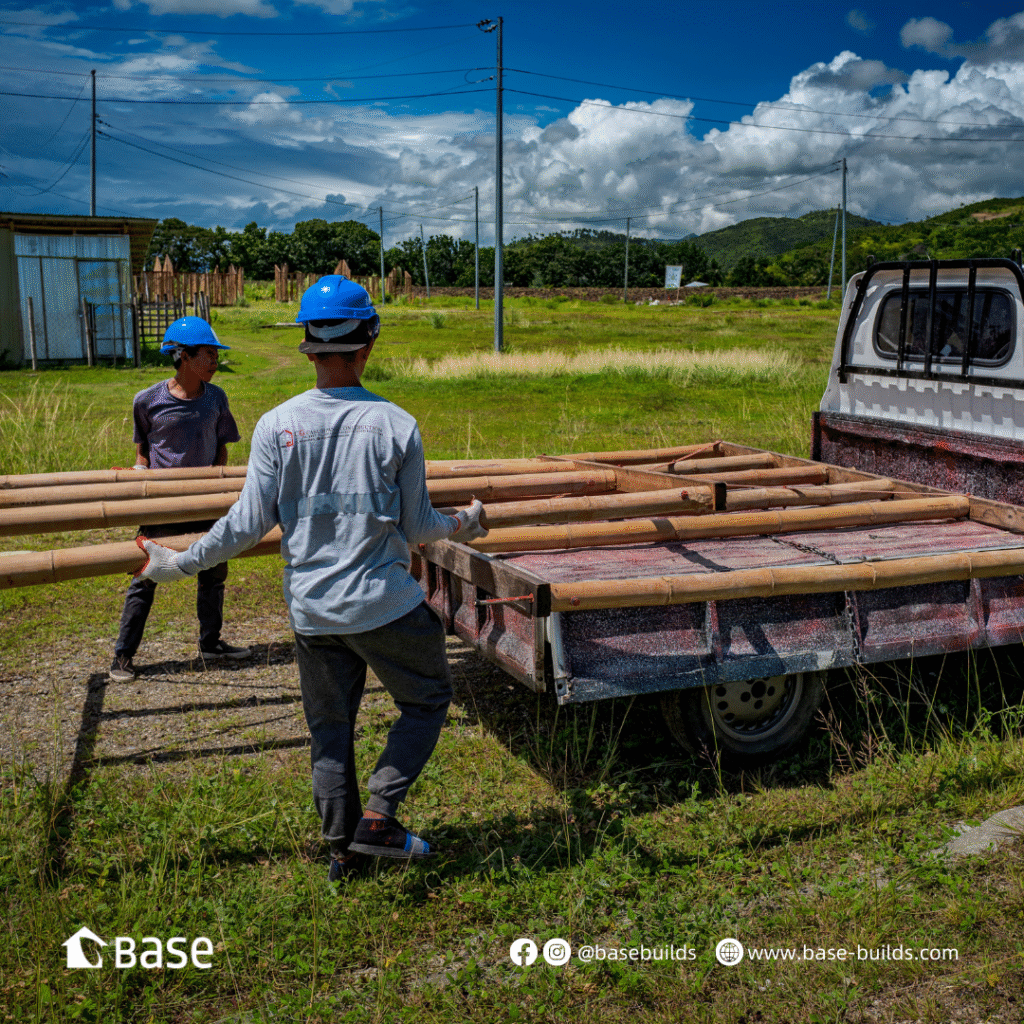
The facility, constructed in only 5 months will serve as a vital hub for bamboo treatment, processing, and production, catering to Region 2 and beyond.  It will create sustainable livelihood for local farmers, with significant annual growth expected as it fuels the region’s bamboo industry.  This initiative directly supports local farmers by establishing a robust value chain, and fostering worker skills through technical training.

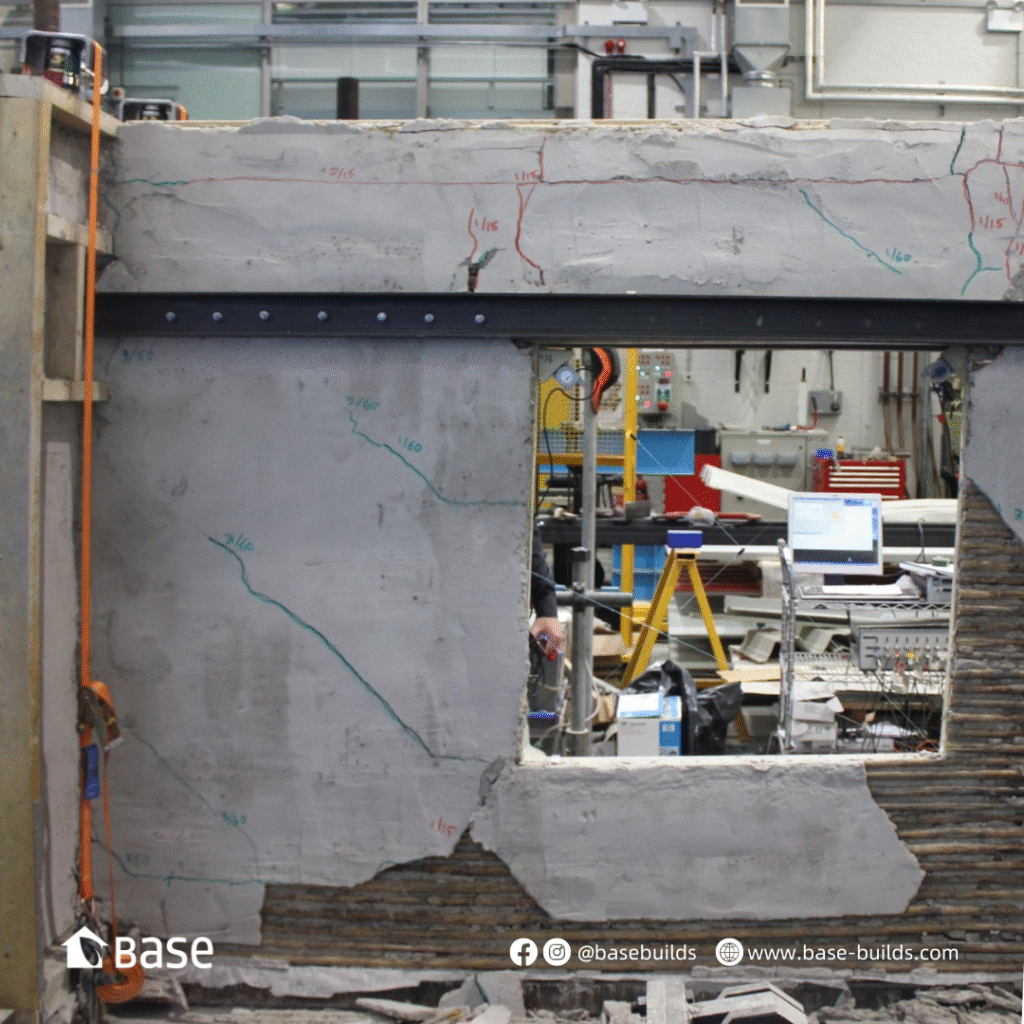
Construction is underway on the single-story duplex model unit initiated by BASE.  This housing unit will be the first installation of the facility’s treated bamboo poles, utilizing BASE’s innovative Cement-Bamboo Frame Technology (CBTF).  CBTF offers not only affordability (at least 20% less expensive than conventional materials) but also exceptional resilience.  Rigorously tested, CBFT homes can withstand Category 5 typhoons (up to 250 kmph), resist earthquakes of magnitude 8.4 (meeting NSCP 2015 seismic requirements), and have a fire rating of up to 120 minutes as required by the National Building Code of the Philippines (NSCP).  Furthermore, the technology provides excellent thermal comfort, leading to savings on electricity, freeing up household budgets for other essentials.  

A nearby duplex model house will showcase the practicality and durability of CBFT, while a prefabrication warehouse will expand the facility’s product offerings beyond treated bamboo poles, further strengthening its contribution to the local economy.  The rapid construction time of CBFT homes (six weeks from panel installation to house completion) adds another layer of efficiency to this innovative approach. 

Says Hon. Jimmy Gamazon, Jr., Municipal Mayor of Quezon, Isabela: “Our partnership with BASE for the treatment facility we unveil today represents our commitment to a sustainable and prosperous future for Quezon.  By investing in resilient housing and empowering our local workforce, we are building a thriving community for generations to come.”

“This facility represents a paradigm shift in sustainable construction,” said Engr. Luis Felipe Lopez, BASE General Manager. “We’re not just building with bamboo; we’re building a better future.  Here in Quezon, we’re creating a value chain that empowers communities, provides skills development, and delivers high-quality, sustainable building materials.  We’re thrilled to partner with the Quezon LGU on a housing project that will showcase the potential of this facility.”

BASE continuously collaborates with local and international institutions to optimize the use of bamboo in a built environment. This shows the strong commitment of BASE to sustainable housing and continuous innovation, positioning itself as a leading global research hub in bamboo construction.

“Through strategic partnerships, BASE is at the forefront of transforming the construction industry,” he explains.  “Our CBFT technology, accredited by the National Housing Authority’s AITECH program, underscores our commitment to eco-friendly solutions.”

He noted that BASE has built 2,500 CBFT homes, sheltering over 10,000 individuals across the Philippines, Nepal, India, and Nicaragua, resulting in over 40,000 tCO2 savings. Beyond housing, CBFT’s versatility extends to non-residential structures like community centers, offices, and schools, demonstrating the vast potential of bamboo in modern construction.

Base Bahay, Vincentian Foundation unveil Bamboo-Based Social Enterprise Center in Quezon City

Through the collaboration between Base Bahay Foundation Inc., and Vincentian Missionaries Social Development Foundation Inc., the community of Bagong Silangan in Quezon City has welcomed a social enterprise center that showcases not only economic empowerment but also alternative building technologies.

Called the Vincentian Social Enterprise Center, this 71-sqm innovative bamboo-based facility is Base Bahay’s second special Cement-Bamboo Frame Technology (CBFT) structure that will open doors for more job and livelihood opportunities for the local community.

The structure, with eight (8) stalls, each with roughly 8.41 sqm floor area, is a blueprint for sustainable architecture, highlighting the potential of bamboo structures to seamlessly integrate within urban landscapes.

The center’s distinctive design features a long gable roof, supported by wing-like diagonal struts that extend from the studs to the roof frames, blending aesthetics and functionality.

“By building this center, we want community members to be empowered enough to provide food on the table for their families while showcasing how CBFT serves as a holistic solution for the global housing gap, climate change, and socio-economic challenges faced by our country,” said BASE President and Hilti Foundation Asia Liaison Maricen Jalandoni.

“We are building more than just durable homes. We are also fostering hope within the communities we support. We aspire to help families sustainably. Through our collaborations, we are empowering them to attain economic independence,” Maricen added.

BASE, a non-profit organization initiated by the Hilti Foundation, provides alternative building technologies that enable a network of partners to build comfortable, affordable, disaster-resilient, and environment-friendly structures with social impact.

To date, BASE has built over 1,200 homes in 15 communities in the Philippines, over 400 homes in four (4) communities in Nepal, and two (2) model houses in India. It also has six (6) bamboo supply facilities across the country and another in Mindanao that is currently in the construction phase.

The Center is part of a larger program by BASE to construct bamboo structures within the community in Quezon City, complementing the existing 50 housing units and the recently completed community center serving as a post-harvest facility.

Part of these initiatives is the Planting for Productivity Project (P4P), a collaborative effort involving BASE, Hilti Foundation, Ayala Foundation Inc., and the Quezon City Government, to build a more food-secure future for households and communities through urban farming.

The P4P is strategically divided into two phases—AgriKaya, which focuses on empowering households through home-based farming, promoting self-sufficiency and healthy eating habits, and AgriKita, which aims to spur urban farming and entrepreneurship to offer livelihood opportunities to households.

These undertakings can provide a big boost to marginalized communities, especially in the face of minimum wages falling short for families of five to meet basic needs. Studies have shown the significance of urban farms in providing families with a steady and practical supply of nutritious food.

“We are grateful for this partnership with BASE as this gives more meaning to efforts of pushing the boundaries of traditional construction. It also proves that when organizations collaborate, we can do more to empower communities and foster self-sufficiency, creating a ripple effect of positive change,” said Fr. Mario Castillo, Vincentian Foundation Executive Director.