What Makes Bamboo a Good Alternative Construction Material?

Bamboo has been rising in popularity as a sustainable construction material due to its versatility. Compared to other materials such as concrete, steel and timber, bamboo is an organic material that can be easily cultivated and harvested in a short time and can be immediately utilized. 

The tensile strength of a bamboo fiber is even two to three times stronger than that of steel. This is one of the many reasons why the design and construction sector around the world find bamboo as a great construction alternative. It is not only affordable but also sustainable. Learn more on why bamboo is a great building material:

Strength and Durability

Bamboo has a high tensile and compressive strength and can withstand heavy loads and extreme weather conditions. It has a higher strength to weight ratio than other conventional materials. An average Bambusa Blumeana can resist 10-15 tons of compression. If properly used and treated, it is also resistant to pests, rot, and decay, making it a durable and long-lasting material. 

Cost-effectiveness

Bamboo is considered a cost-effective material due to its fast growth rate, low maintenance requirements, and versatility in product applications. The production costs of bamboo products can be lower than for products made from other materials because bamboo requires minimal inputs and can be processed using simple techniques. Because bamboo is lightweight and grows in many regions around the world, transportation costs for bamboo products can be lower. Bamboo’s versatility in product applications can also increase its economic value, making it a cost-effective and sustainable alternative to traditional building materials and other products.

Eco-friendly material

Bamboo is a renewable resource that grows quickly and can be harvested without causing damage to the environment. Bamboo has a unique ability to absorb and store carbon dioxide from the atmosphere, making it an effective tool in mitigating climate change. Based on studies, bamboo can sequester up to 35% more carbon than other types of trees and plants. It is a sustainable alternative to traditional building materials like concrete and wood that has a lower carbon footprint and is more energy-efficient than these materials.

It requires no maintenance

Bamboo requires little to no maintenance because it has a rapid growth rate, is drought-tolerant, has natural defenses against pests and diseases when growing, and is able to self-regenerate after harvest. These characteristics make bamboo a low-maintenance crop that can provide a sustainable source of materials and income for communities.

High demand is no problem

One of the benefits of bamboo is that it can be easily restocked. Bamboo is also the fastest-growing plant on earth. Bamboo species like Dentrocalamus Asper, Guadua, and Bambusa Blumeana grow 20 cm, 15 cm, and 17 cm per day respectively.

Compared to hardwood trees which can take 30 to 50 years to reach a harvestable age, most bamboo only take about three or four years to reach full maturity. This means that there is an abundant supply of bamboo to sustain the needs of the construction industry.

Aesthetics

Bamboo has a unique and attractive appearance that can enhance the visual appeal of a building. It can be used in various ways, such as structural elements, flooring, wall cladding, and roofing. When used in construction, bamboo can create a warm and natural look that complements many architectural styles.

The Future of Bamboo as a Building Material

Due to its affordability and sustainable components, bamboo is definitely a great alternative for contemporary construction. Due to its environmental features, coupled with the integration of advanced technologies and prefabrication techniques, bamboo is poised for a promising future.

Base Bahay Foundation, Inc (BASE) is the pioneer of Cement-Bamboo Framework in the Philippines. BASE builds affordable and disaster-resilient structures using bamboo-based technology. Through continuous research in the Base Innovation Center (BIC), BASE is optimizing the technology and looking for new applications outside its standard model. BASE also offers training courses under its Bamboo Academy program to share the alternative building technologies and provide further knowledge on bamboo construction. Learn more about BASE projects and initiatives!

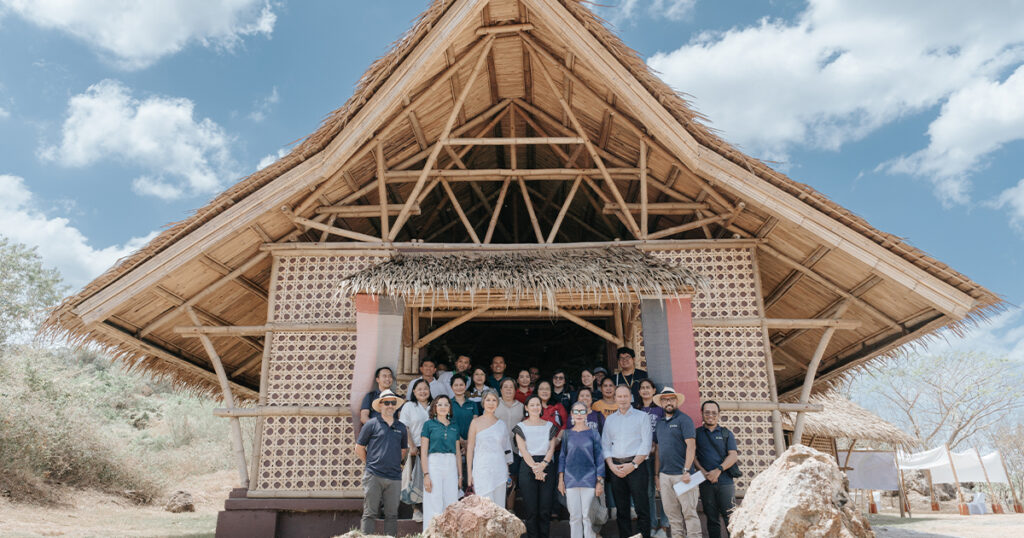
Kanya Kawayan Weaving Center in Batangas Built with Base Bahay’s Sustainable Construction Technology

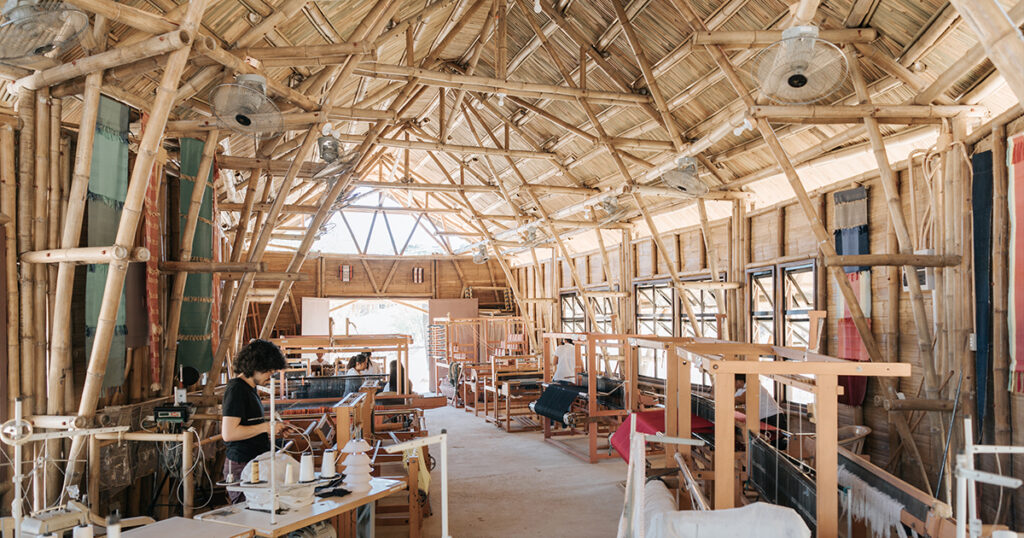
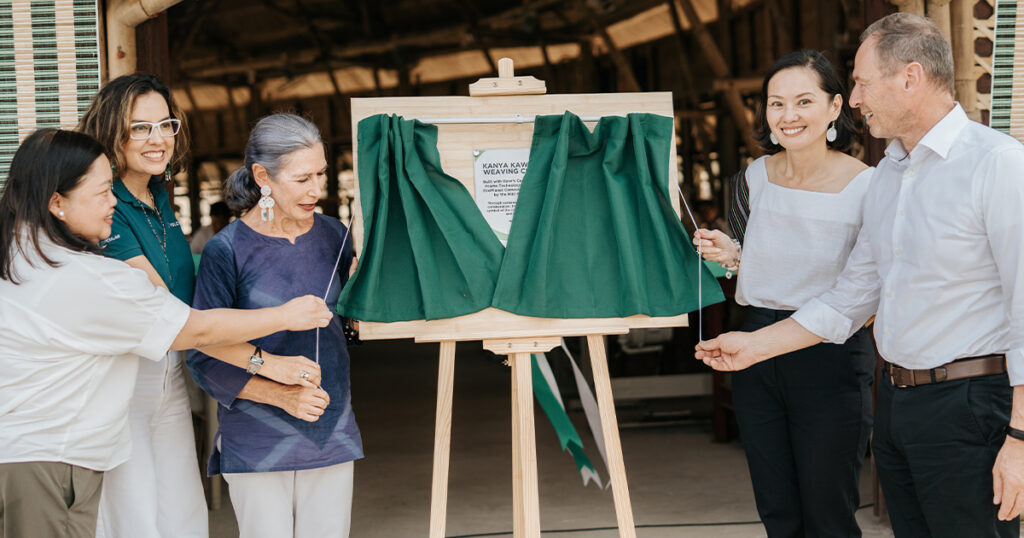
In the fields of Nasugbu, Batangas, humble agricultural products are at the forefront of sustainable livelihood and architecture, thanks to the recent partnership of two like-minded social enterprises: Kanya Kawayan and Base Bahay. It’s a collaboration that will soon see the completion of the Kanya Kawayan Weaving Center— a space where Filipinos can celebrate the coming together of sugar cane and bamboo products, all with the aim of creating a more sustainable future for the country.

The 148-sq m Kanya Kawayan Weaving Center will house the organization’s production of artisanal creations, which help generate employment and alternative livelihood opportunities for around 40 wives and family members of the local farmers in the area. Kanya Kawayan transforms bagasse, a sugarcane residue, into a pioneering, eco-friendly, natural weaving fabric used for their products.

They are also one of Base Bahay’s bamboo supply and treatment partners.

“I am happy to attest that the foundations put by our partners today are strong and firmly established as they come. Base Bahay is a seasoned partner of ours and has, through the years, stayed the course on sustainability, come hell or high water,” says Beatriz Roxas, Kanya Kawayan president.

Using Base Bahay’s Cement Bamboo Frame Technology, which features bent bamboo poles that give the structure its curves, the Kanya Kawayan Weaving Center also uses ECOPlanet cement, which leaves 30 percent less carbon footprint compared to ordinary cement. The building is as resilient as it is sustainable; the structure is resistant to earthquakes, typhoons, fire, and insect infestations.

Thanks to its unique design, the center has received the honor of being the first project to use the ECOPlanet Cement in the Holcim Philippines, Inc.’s  Houses of Tomorrow, a project which finds and supports sustainable construction technologies through innovation and smart design, “to demonstrate that a low-carbon built environment is achievable and empowers people to live sustainably today.”

Base and Holcim are in discussions to develop a lifecycle analysis of structures such as the Kanya Kawayan Weaving Center to see how they contribute to the reduction of our carbon footprint compared to conventional structures.

The construction of the weaving center began in July 2022 and was completed in December 2022.

“We are happy to support like-minded partners like Kanya Kawayan and Holcim, as we have been brought together by a common innovation mindset – one that is focused on being environment-friendly and sustainable,” says Maricen Jalandoni, Base Bahay president. “We will soon open a structure within which all these technologies will finally be put into practice.”

Bamboo Breakthroughs in 2022: Non-Profit Base Bahay Grows a Community of Bamboo Advocates across the Philippines

From the government to the academe to the private sector, bamboo brought together the housing community in 2022 through initiatives spearheaded by the non-profit Base Bahay Foundation (Base).

Partnerships to build bamboo homes for Filipino communities

Committed to a vision of “Building sustainable foundations for the future”, Base works with its network of partners to build homes for various beneficiaries all over the country using Base’s Cement-Bamboo Frame Technology (CBFT).

Base’s CBFT is certified by the Accreditation of Innovative Technologies for Housing (AITECH) and the National Housing Authority, making each Base home comfortable, affordable, disaster-resilient, and ecologically friendly.    

In 2022, 188 new houses were added to Base’s growing portfolio of over 1,200 disaster-resilient residences built across the Philippines, sheltering around 5,000 individuals in 14 communities.  Best of all, each “build” brings livelihood to its host community. This also includes the Negros Occidental Impact 2025 (NOI2025) project with Habitat for Humanity, which aims to build 10,000 cement-bamboo frame homes in response to the growing need for socialized homes in disaster-prone areas, particularly in Visayas.

As part of its initiative to scale up its projects globally, Base also has international collaboration in Nepal to build more disaster-resilient communities using its technology.

Last year the organization also moved beyond housing to co-develop the Kanya Kawayan Weaving Center in Nasugbu, Batangas, in partnership with Holcim Philippines, Inc. and Kanya Kawayan, a like-minded social enterprise that aims to elevate the use of bamboo. The 148-sq m Weaving Center will house the organization’s production of artisanal creations, which help generate employment and alternative livelihood opportunities for Batangueños.

With the aim to empower communities with further economic opportunities, Base also works with Ayala Foundation, Inc., and other organizations on the Planting for Productivity (P4P) project that teaches the community about organic urban farming.

“As leaders in the field of sustainable housing technologies, we recognize that we play a pivotal role in ensuring that every Filipino has access to a home,” said Base Bahay General Manager Dr. Pablo Jorillo, referencing the country’s housing backlog as he points out bamboo’s abundance. “We are excited to share that Base has signed a memorandum of agreement with five other organizations for the construction of bamboo structures and the implementation of other programs in their respective communities.  We hope to unlock more partnerships that will help us provide homes for more Filipino families.”

Working to bring bamboo into mainstream construction

Shares Base Bahay Head of Technology Luis Felipe Lopez Munoz: “a key part of our commitment to promoting sustainable housing technologies is constant innovation. Our vision is to be the global reference for bamboo and sustainable construction in order to help countries find alternative construction methods.”

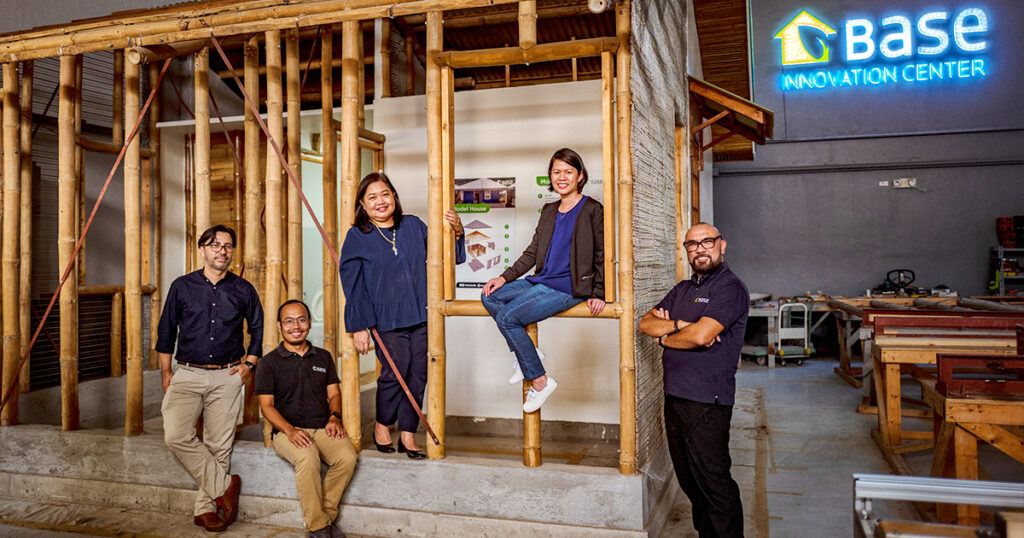
At the Base Innovation Center (BIC) in Makati, the country’s first research and testing facility for sustainable and disaster-resilient construction technologies, Base is leading the charge on research and innovation surrounding the use of bamboo for the affordable housing sector.

Passionate about advocating the use of bamboo in mainstream construction, Base works with the Association of Structural Engineers of the Philippines (ASEP) to advocate the creation of our own National Structural Code for Bamboo.   

As part of its research and development initiatives in 2022, Base Bahay formed two new key partnerships with local universities Polytechnic University of the Philippines (PUP) and the Technological University of the Philippines (TUP). BIC also partnered with the Department of Trade and Industry – Philippine Textile Research Institute (DOST-PTRI) for further research opportunities and to bring its innovative products to Base communities.

Today, BIC works with 14 local and international university partners, allowing them to engage in special projects, such as the use of an augmented reality application in panel fabrication with incon and ETH Zurich, and Panel Fabrication Table with Hilti P4.

“Since its launch in 2021, BIC has gained more attention from different local government units, institutions, and organizations globally with more people visiting the facility and engaging in partnerships with Base,” adds Luis Lopez.  “So far, BIC has conducted 14 research works and completed 5 publications in collaboration with different local and international institutions.”

Adds Jorillo: “These research partnerships are essential to BIC and Base, as we continue to push for sustainable construction, particularly CBFT, to be the building technology of choice in the industry.  CBFT homes are disaster-resilient, environment-friendly, and sustainable –important elements for permanent housing here in the Philippines where we face multiple typhoons every year.”

Within its own organization, Base invested in organizational development, and is standardizing its processes through the deeper involvement of its own employees in drafting plans and strategies.

“We have likewise started to undergo a series of training courses on Quality Management, so we can successfully adopt the system and get certified for ISO 9001,” Jorillo says.

Teaching a new generation of bamboo builders

On top of its focus on research and development, Base Bahay continues to equip the housing and construction industry by offering Continuing Professional Development (CPD) Programs to architects, engineers and other construction professionals; and skills training to workers.  Last year, online and in-person programs on Bamboo Standards and CBFT saw over 800 participants composed of professional builders and bamboo enthusiasts.

One of the highlights of Bamboo Month last September was the Bamboost, a forum on bamboo architecture and design developed by Base to upscale green construction.  Leading the line-up of local and international experts speaking at the forum was Jörg Stamm, a Colombia-based bamboo construction specialist and trainer, widely known for his design and construction of engineered bamboo structures in different countries.  Stamm was joined by Base Head of Technology Luis Felipe Lopez and three heavyweights in the field of bamboo architecture: architect and urban designer Munir Vahanvati, Filipino-American architect  and Kawayan Collective co-founder Ray Villanueva,  and multi-awarded Filipino architect Christian Salandanan who is widely known for his work with bamboo.

“This year, we are looking forward to establishing even more programs and other initiatives that will continue to put bamboo and CBFT front and center in the Philippines’ housing and construction industry,” says Maricen Jalandoni, Base Bahay president. “We believe this kind of technology is what we need to fulfill Filipinos’ need for more affordable yet high-quality and sustainable homes.”

Base Bahay launches first research, testing facility for sustainable bamboo house technology in the Philippines

January 27, 2021, Makati, Philippines—In line with their goals of promoting sustainable housing technologies, Base Bahay, the pioneering foundation that provides alternative building technologies for socialized housing, has launched the Base Innovation Center (BIC) last January 27.

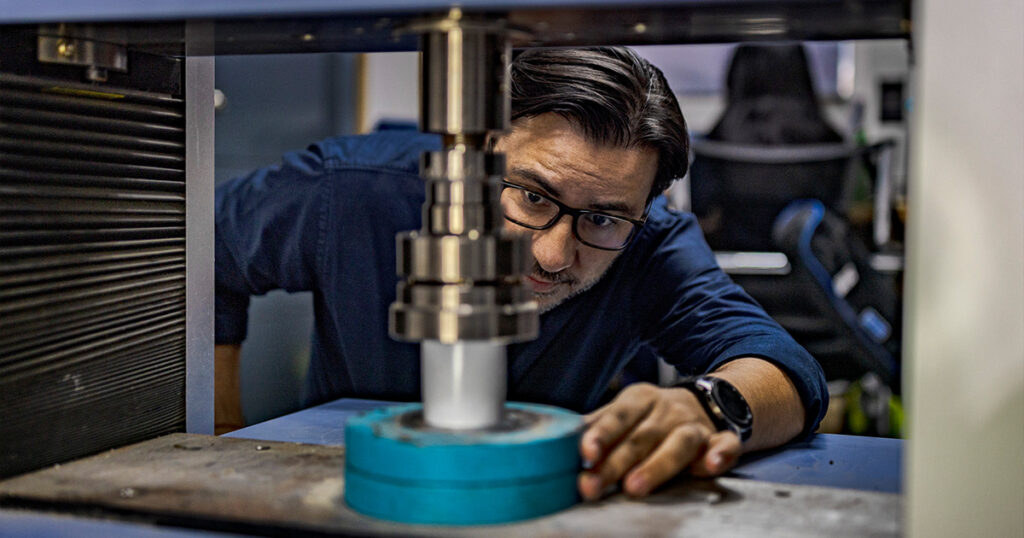
Located in the Foundation’s Makati office, the BIC is the first research and testing facility for sustainable and disaster-resilient construction technologies in the country. It houses a Universal Testing Machine, a Bamboo Wall Panel Reaction Frame, fabrication tables, and a model house, wherein new materials and building techniques are tested.

Base Bahay Head of Technology Luis Felipe Lopez Munoz shared, “A key part of our commitment to promoting sustainable housing technologies is constant innovation.”

He added, “With the launch of this innovation center, we aim to further our research on bamboo construction technology, that we may continue to provide Filipinos with more affordable and resistant solutions to housing.”

Together with their partners, Habitat for Humanity Philippines and the Hilti Foundation, they are hoping to further optimize bamboo construction technology and promote its widespread use in the country.

With the launch of the BIC, they are targeting to build 10,000 cement bamboo houses by 2024, in response to the growing need for socialized homes in various disaster-prone areas within the Luzon and Visayas regions.

As of 2020, Base has built over 800 houses, 10 communities, 5 supply facilities, and housed over 4,000 individuals across the Luzon and Visayas areas. They’ve also trained over 100 TESDA-certified workers on masonry, carpentry, and in the application of cement bamboo technology in the
country.

Currently, Base has ongoing research projects with the De La Salle University which focus on the determining the strength and mechanical properties of various bamboo species.

Base Bahay General Manager Dr. Pablo Jorillo said that these studies are being conducted to guide the development of a local structural code for bamboo, aligned with the Philippine National Standard (PNS) 22157 and the proposed International Organization for Standardization’s ISO 22156. The former determines the specific testing procedures for obtained bamboo culms, while the latter is meant to institutionalize the use of bamboo in structural design.

Dr. Jorillo shared, “As leaders in the field of sustainable housing technologies, we recognize that we play a pivotal role in ensuring that every Filipino has access to a home.”

He added, “Through the Base Innovation Center, we are looking to open more doors with our partners, that we may continue to provide Filipino families strong cement bamboo structures for their homes, intensive research that will encourage innovation, and comprehensive technology training.”

To know more about Base Bahay Foundation and their projects, you may visit http://www.base-builds.com/.

True Filipino Resilience

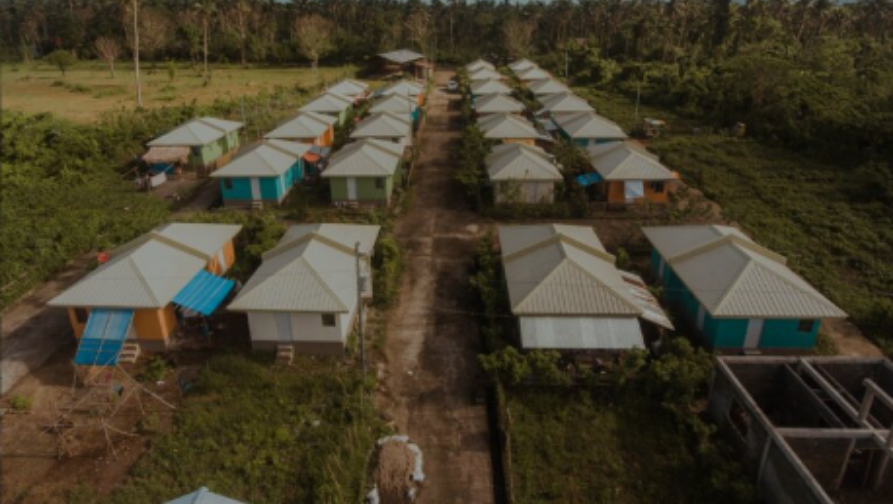
For the residents of the Don Jose M. Beringuer Sr. Bamboo Village in Sorsogon City, Sorsogon, “resilience” is not just a trendy rhetoric, it’s a yearly necessity.

Part of the Bicol region and directly facing the Pacific Ocean, Sorsogon is among one of the most-often hit areas in the Philippines for typhoons. It is regularly visited by at least 2-3 direct hits from typhoons every year; This year alone, the Bicol region was hit one after the other by Typhoons Quinta and Rolly, which sustained maximum winds of 130 kph and 315 kph respectively.

Millions in damages are sustained per year, and as always, it is those living in less than adequate housing and temporary shelters who remain the most vulnerable to these hazards.

Though an outpouring of donations and relief operations greatly help the region after every destructive typhoon, it becomes more and more obvious that there is an urgent need to re-evaluate the way we see resilience. Filipino resilience must be redefined to not just be the ability to cheerfully pick up the pieces after every damaging typhoon, but more than anything, must mean learning from and being prepared for the next. Typhoons are naturally-occurring, but disasters are preventable – loss of lives and property can be avoided through providing safe, disaster-resilient, and adequate housing to those most at risk.

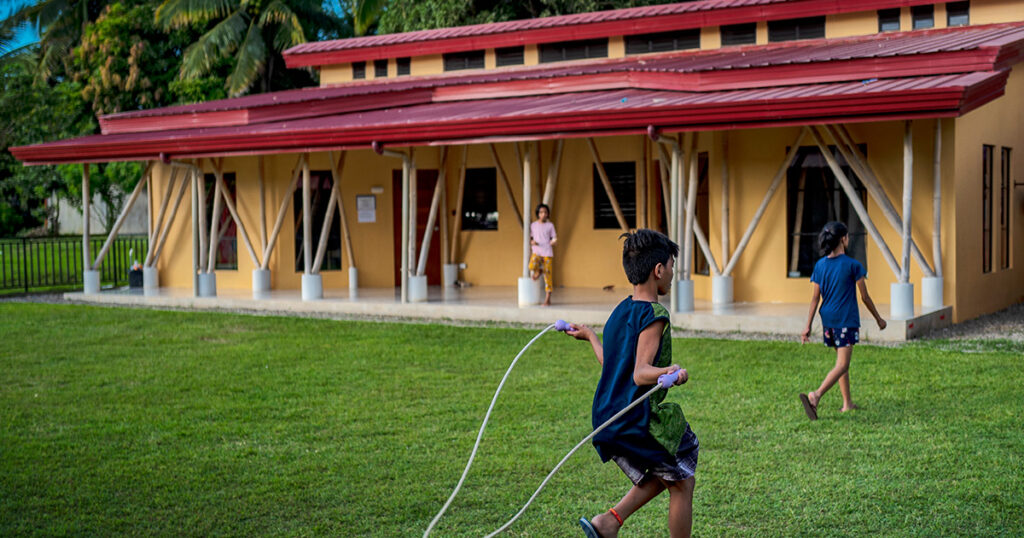
Since its construction in 2017, the Don Jose M. Beringuer Sr. Bamboo Village in Sorsogon has withstood three major typhoons – Typhoon Tisoy in 2018, which sustained maximum wind speeds of 215 kph, and Typhoons Quinta and Rolly this year. Beneficiaries have reported that the CBFT houses sustained no damage, with the community kept safe during the onslaught of the typhoons.

“Yung Bagyong Tisoy talaga sobrang lakas ng hangin. Pero safe na safe kami dito, walang nasira sa amin.” [“The winds of Typhoon Tisoy were really strong. But we were safe here, there was no damage at all.”]

Now more than ever, we must recognize that resilience is not just about getting back up after every disaster; resilience is actively preparing for and ensuring that future disasters are prevented.

Cemex Philippines Foundation supports building with Cement-Bamboo Frame through its Build Education, Build Environment, Build Sustainability Program

Here at Base Bahay, we believe that sustainable development is not a one-man job; true change can only be achieved through an intersectional collaboration of partners that work together for holistic development.

This month, we sat with Ms. Erlinda Lizardo, Corporate Communications Manager of Cemex Foundation Philippines. As the arm of Cemex Philippines in charge of corporate social responsibility programs, Ms. Lizardo heads the Foundation’s many development programs that operate nationwide.

“The vision of the Foundation is really to help uplift the lives of the Filipino people. Our projects are geared towards helping the Filipinos improve their quality of life, whether it’s in housing, environment, education, or training, skills-improvement.”

Currently, the Foundation is focusing on three main advocacies: Build Education, Build Environment, and Build Sustainability. “These are areas we can share knowledge, in terms of the partnerships that we build, with the communities and other organizations,” Ms. Lizardo says, with regard to their Build programs; “These are things that we are really able to develop technology-wise, and where our expertise lies.”

This is seen particularly in their global programs such as the acclaimed Patrimonio Hoy program spearheaded by Cemex Foundation Mexico. The program utilizes a business model that engages with the base of the pyramid, giving low-income families access to building materials, and enabling them to build their own homes. To date, the program has helped elevate the lives of more than 450,000 families in Mexico. Though the Philippine office has yet to adopt this program, this is something that they hope to implement as well in the country.

Cemex Foundation Philippines has had partnerships and projects with different organizations for housing projects, including Gawad Kalinga and Habitat for Humanity in Cebu, as well as with Base Bahay Foundation. This year, Cemex Foundation Philippines has donated bags of cement to 4P for People and Base Bahay Foundation for the construction of the Rejoice Children’s Village project in Batangas.

Looking forward, Cemex Foundation Philippines has a lot more planned for their projects, including establishing more partnerships as well as launching educational programs for public school students, engineers, and architects. Ultimately, the Foundation aims to expand their reach to more local communities in need.

“In the coming years we hope to be able to scale up, to help countless Filipinos, help their lives improve. We’re building a better future for Filipinos.”