Onsite Bending Test: Bridging the Gap Between Field and Laboratory
Overview
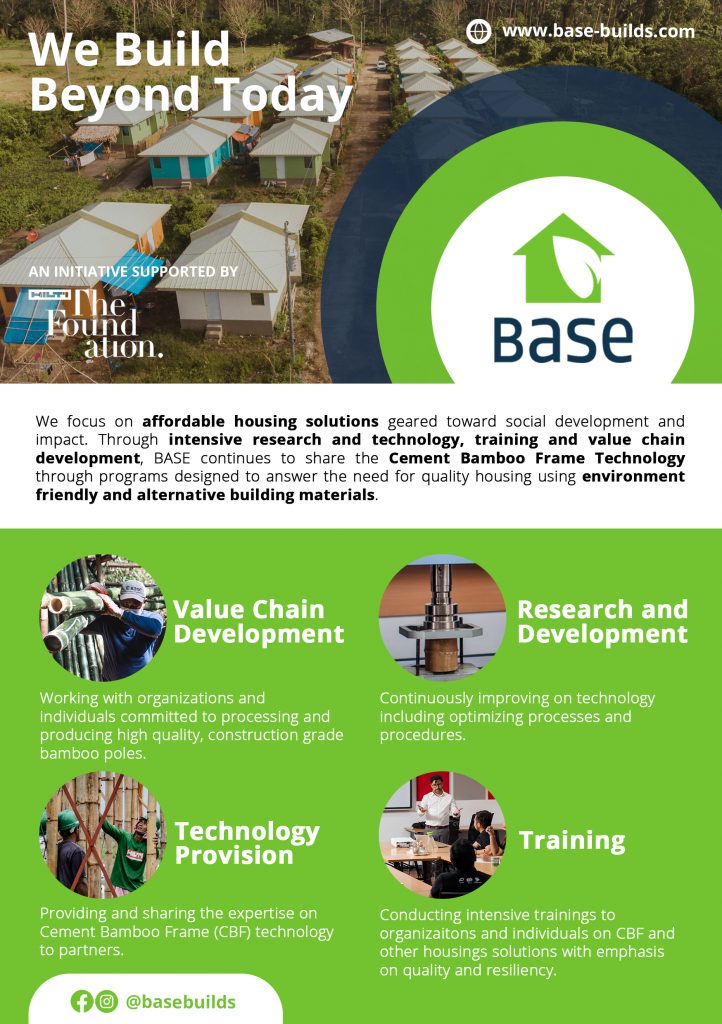
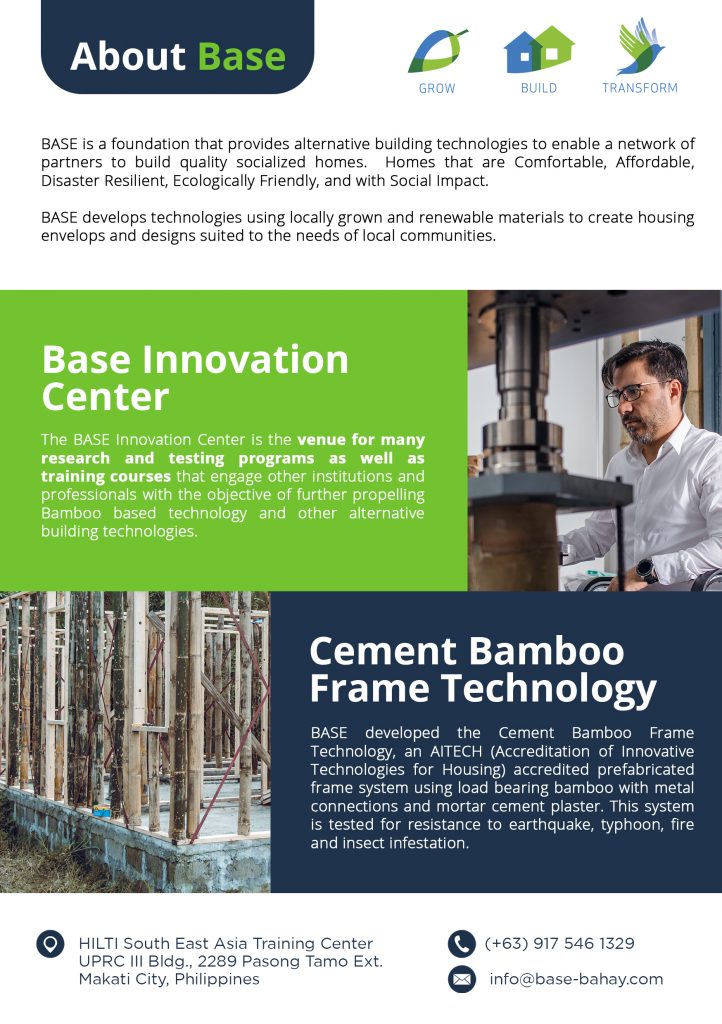
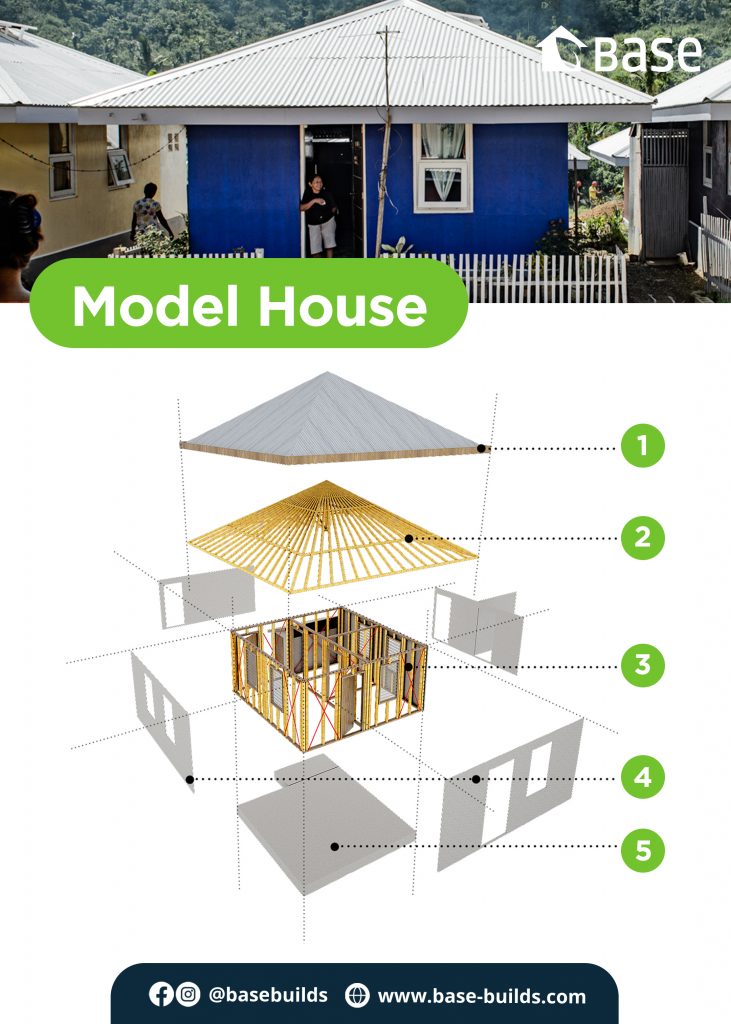
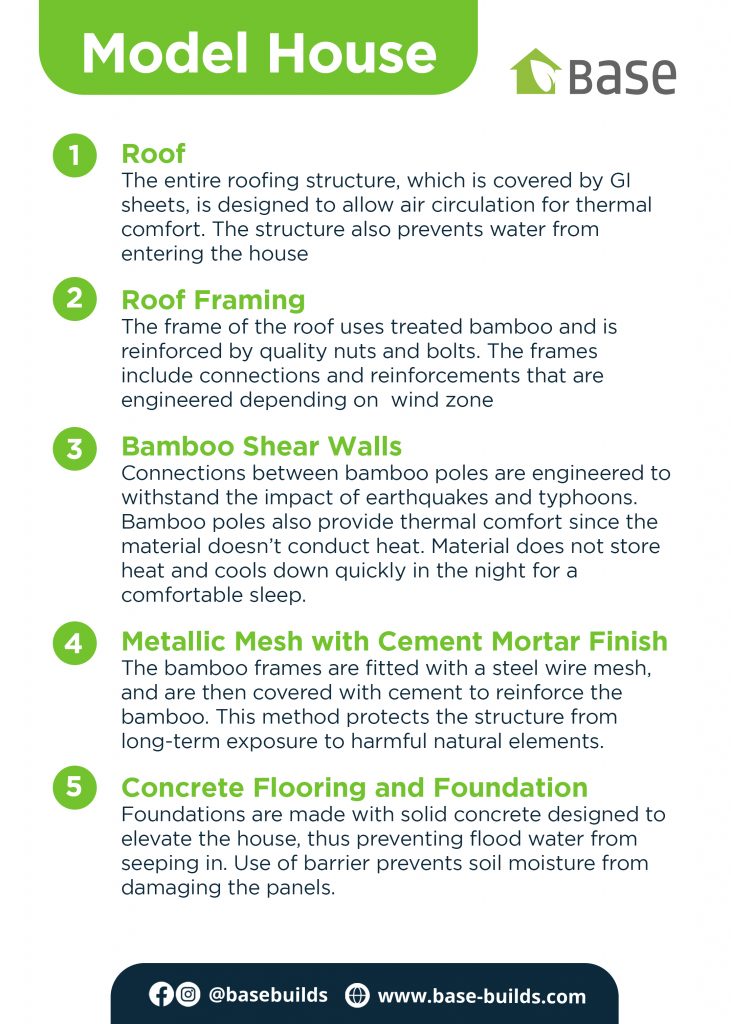
Reliable structural data is the foundation of every safe, sustainable bamboo building. To support this, the Base Innovation Center has developed a standardized toolkit that brings professional-grade testing directly to your project site. For projects located in remote areas or those requiring efficient, on-site material validation, this toolkit offers a practical, ISO-compliant methodology for evaluating the mechanical properties of bamboo culms. By streamlining the testing process, this resource ensures that structural assessment remains both rigorous and accessible.
Resource Components:
- Technical Manual: Covers the full workflow from harvesting with grading of bamboo poles to geometric characterization and the 4-point bending test protocol.
- Rig Schematics: Includes an item checklist and engineering drawings for the components and assembly of the test rig.
- Analysis Spreadsheet: A pre-formatted tool to input load and displacement data to easily calculate the Modulus of Elasticity and Bending Strength
- Video Walkthrough: Demonstrates the physical setup of the 4-point bending test
Technical Manual
Rig Schematics
Analysis Spreadsheet
Disclaimer: This spreadsheet is provided for reference and general guidance only. It is intended to assist qualified professionals in performing field testing (bending test) and should not be considered a substitute for sound engineering judgment or professional expertise. All inputs, outputs, assumptions, and interpretations derived from this tool are the sole responsibility of the user. It is the user’s duty to ensure that all designs comply with applicable building codes, local regulations, site-specific conditions, and project requirements.
While reasonable efforts have been made to ensure the accuracy of this spreadsheet, Base Bahay Foundation, Inc. makes no warranties, express or implied, regarding its completeness, accuracy, or fitness for a particular purpose. Base Bahay shall not be held liable for any loss, damage, or consequence arising from the use, misuse, or reliance on this spreadsheet or its results. By using this spreadsheet, the user agrees to release, indemnify, and hold harmless Base Bahay Foundation, Inc., its affiliates, officers, employees, and consultants from any and all claims or liabilities related to its use. Use at your own risk.