Authors
Corinna Salzer
Holger Wallbaum, Chalmers University of Technology
Luis Felipe López, Base Bahay Foundation Inc.
Jean Luc Kouyoumji
Abstract
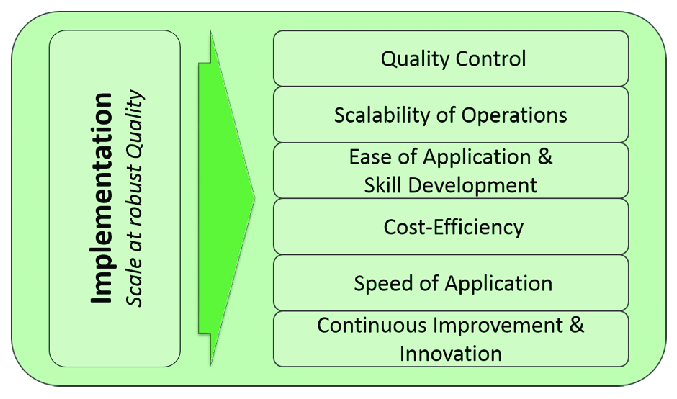
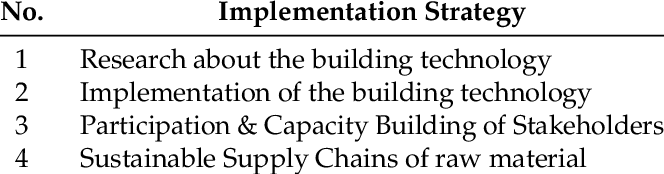
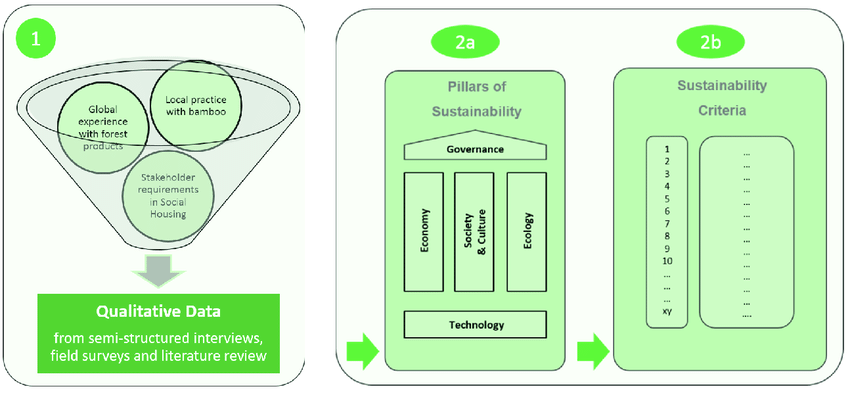
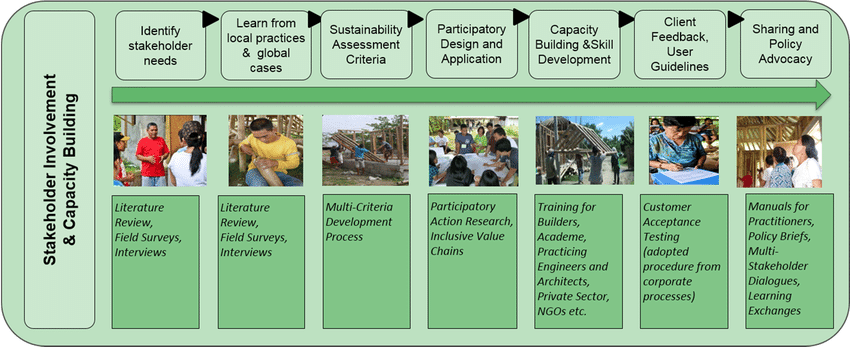
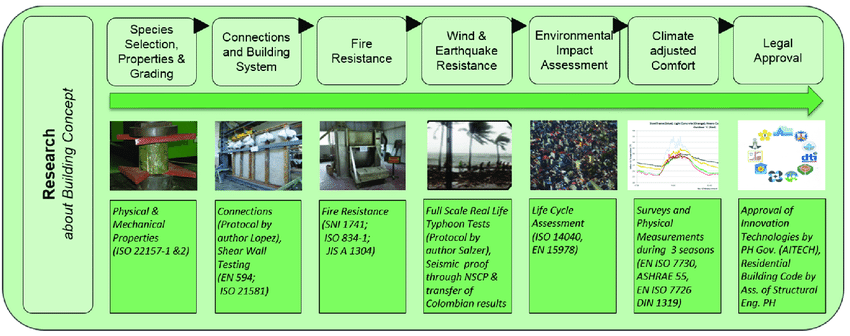
This paper highlights the need for more inclusive and sustainable development of social housing in rapidly developing countries of Asia, Latin America, and Africa. In the example of the Philippines, a multi-perspective development process for a bamboo-based building system is developed. Sustainability Assessment Criteria are defined through literature review, field observations, and interviews with three stakeholder clusters: (1) Builders and users of traditional bamboo houses in the Philippines; (2) Stakeholders involved in using forest products for housing in other countries around the world; and (3) Stakeholders in the field of social housing in the Philippines. Through coding and sorting of data in qualitative content analysis, 15 sustainability assessment criteria are identified clustered into the dimensions of society, ecology, economy, governance, and technology. Guided by the sustainability criteria and four implementation strategies: (A) Research about and (B) Implementation of the building technology; (C) Participation and Capacity Building of Stakeholders; and (D) Sustainable Supply Chains, a strategic roadmap was created naming, in total, 28 action items. Through segmentation of the complex problem into these action items, the paper identifies one-dimensional methods leading to measurable, quantitative endpoints. In this way, qualitative stakeholder data is translated into quantitative methods, forming a pathway for a holistic assessment of the building technologies. A mid-point, multi-criteria, or pareto decision-making method comparing the 28 endpoints of the alternative to currently practiced conventional solutions is suggested as a subject for further research. This framework paper is a contribution to how sustainable building practices can become more inclusive, incorporating the building stock of low-income dwellers. It bridges the gap between the theoretical approach and practical applications of sustainability and underlines the strength of combining multi-dimensional development with stakeholder participation.
Figures