Tag: Material Characterization

Discovering the Best Varieties of Bamboo for Sustainable Construction

In recent years, sustainable building practices have gained immense popularity as individuals and industries strive to reduce their environmental impact and create more eco-friendly structures. One remarkable material that has captured the attention of professional builders globally is bamboo. Bamboo has emerged as a viable alternative to traditional construction materials, offering a number of benefits that contribute to sustainable building practices. 

When it comes to selecting bamboo varieties, several options show particularly favorable characteristics. Here are some of them:

Genus Guadua

Genus Guadua comprises approximately 20 or more different species, all of which are characterized by their remarkable size. These massive bamboo varieties grow in the tropic and subtropic regions such as Central and South America. Guadua species are known for their impressive growth potential, reaching towering heights. 

Guadua Bamboo is one of the most ideal bamboo species to use in construction. Due to its straightness, it allows an easy application to structure and provides a good consistency in design as compared to curved bamboo. Along with that, due to its short internode length, this provides more support for the building by adding additional resistance. Currently, BASE is investigating different plantations in the Philippines for Guadua Bamboo for potential testing on its characteristic strengths.

Genus Dendrocalamus

Dendrocalamus is a genus of bamboo plants that is primarily found in the tropical and subtropical regions of India and Southeast Asia. It consists of numerous species that play an important function in the construction industry. One notable species within this genus is Dendrocalamus asper, commonly known as giant bamboo. This particular variety is widely utilized in heavy construction projects across Indonesia and the Philippines.

BASE is performing several mechanical property tests on Dendrocalamus Asper to obtain its characteristic values. The average strength of this species of bamboo in compression ranges from 40 to 60 Megapascals with some samples reaching around 20 tons capacity.

Genus Phyllostachys

Phyllostachys bamboos encompass a wide range of benefits, serving various purposes. One particular species of Phyllostachys is Phyllostachys edulis, commonly known as Moso bamboo, holds significant importance due to its remarkable culm size and versatile range of uses. 

Genus Bambusa

Genus Bambusa are known for their aesthetic appeal and widespread cultivation in gardens and landscapes. Bambusa bamboo exhibit a wide range of sizes, with certain species capable of reaching impressive heights and featuring culms with diameters measuring several centimeters. However, it’s important to note that the size of Bambusa bamboo can vary depending on the specific species and the prevailing growing conditions.

In the Philippines, a well-known bamboo species is Bambusa blumeana or Kawayang Tinik. This bamboo species is recognized for its structural grade properties when mature and is frequently available within the country. BASE is now almost complete with all the mechanical properties to be conducted with this species. Through partnership with different universities in the Philippines, BASE hopes to publish into a journal the findings of the characteristic values of this species for future design with structural grade bamboo such as Bambusa Blumeana.

As the world increasingly focuses on sustainability and environmental consciousness, the utilization of bamboo in construction is becoming more prominent. Bamboo possesses remarkable strength, exhibits rapid growth, and offers versatility, making it an ideal choice for those who are seeking sustainable alternatives. However, it is crucial to note that not all bamboo is applicable for construction. They must undergo proper treatment and tests before being used as a building material. Collaboration with BASE can contribute to the development of sustainable practices and ensure the proper use of bamboo, promoting a greener approach to construction.

Base Bahay Foundation, Inc (BASE) is the pioneer of Cement-Bamboo Framework  in the Philippines. BASE builds affordable and disaster-resilient structures using an innovative bamboo-based technology. Through continuous research in the Base Innovation Center (BIC), BASE is optimizing the technology and looking for new applications outside its standard model. The BIC is also equipped with the latest technology for testing different bamboo species and alternative building systems. Additionally, BASE offers training courses under its Bamboo Academy program to extend its alternative building technologies to different communities and provide further knowledge on bamboo construction. Build with BASE and engage in sustainable construction.

Mechanical Performance of Treated Bambusa Blumeana (Bamboo) Fibers

Authors

Roneh Glenn De Guzman Libre Jr., De La Salle University
Michael Angelo Promentilla
Lessandro Estelito O. Garciano, De La Salle University
Bernardo Lejano
Andres Oreta, De La Salle University
Jason Ongpeng, De La Salle University
Ernesto Guades, Technical University of Denmark
Julius Leaño Jr
Audric Zuriel Cruz
Luis Felipe López, Base Bahay Foundation Inc.

Abstract

Natural fibers are being explored nowadays to provide the tensile strength needed in cementitious matrices. To give better bondage between the fibers and the matrices, surface enhancements for natural fibers can be induced through chemical treatments. In the current study, fibers are extracted from Bambusa Blumeana, an abundant local species of bamboo plant from the Philippines. Bamboo slats are pre-treated with varying concentrations of 5%, 10%, and 15% sodium hydroxide (NaOH), and extracted fibers are treated with 10% aluminum sulfate (Al2(SO4)3) solution. Extracted bamboo fibers are subjected to a Single Strand Tensile test. It is observed that bamboo slats submerged in 5% NaOH provides a better mean tensile peak load. Scanning Electron Microscopy (SEM) images show however that the fibers submerged in higher concentrations have developed rougher surface enhancements. The results can be used for developing bamboo fiber reinforced fly-ash-based geopolymer composites and with further studies, can be applied as textile reinforcement for structural strengthening or retrofitting.

Development of Load Tables for Design of Full-Culm Bamboo

Authors

Kent Harries, University of Pittsburgh
David J A Trujillo, Coventry University
Sebastian Kaminski, Arup
Luis Felipe López, Base Bahay Foundation Inc.

Abstract

Design aids in the form of load tables or span tables are well known to engineers and are commonly used in timber and steel design. Such tables reduce the need for repetitive calculation and allow for easy ‘what-if’ queries during design. They also permit rapid communication of minimum design requirements. This paper demonstrates an approach for developing design load tables for full culm bamboo elements for compression and flexure. The design tables are based on the provisions of ISO 22156:2021 and are most easily developed based upon an established grading procedure as described by ISO 19624:2018. Prior to the synthesis of these two standards, the generation of such load tables for bamboo was not practical. The development of archetypal column axial load tables and beam flexural span load tables is demonstrated. Examples of their use are illustrated demonstrating how alternate designs are easily established and compared. Such load tables are most appropriate for bespoke in-house design aides or as “national annexes” appended to ISO 22156:2021 upon its adoption by a jurisdiction.

Durability of Whole Culm Bamboo: Facts, Misconceptions and the New ISO 22156 Framework

Authors

Sebastian Kaminski, Arup
Kent Harries, University of Pittsburgh
Luis Felipe López, Base Bahay Foundation Inc.
David J A Trujillo, Coventry University
Hector F Archila, University of the West of England, Bristol

Abstract

The durability of bamboo is one of the most important aspects to consider when designing and building with this nature-based material. Durable structures with bamboo are resilient, cost-effective, and have a lower whole life-cycle environmental impact. This paper firstly reviews the main causes of the decay of bamboo: beetle, termite, and fungal, and then discusses the efficacy of different treatments-both traditional and modern. Common misconceptions around the durability of bamboo and its preservation methods are corrected. Finally, the recently published framework for the durability of bamboo within ISO 22156 – Bamboo Structures, based on Use Classes, is presented.

Calibrating Two Wood Moisture Meters for Two Species of Bamboo

Authors

Carlo Cacanando, Base Bahay Foundation Inc.
Luis Felipe López, Base Bahay Foundation Inc.
David J A Trujillo, Coventry University

Abstract

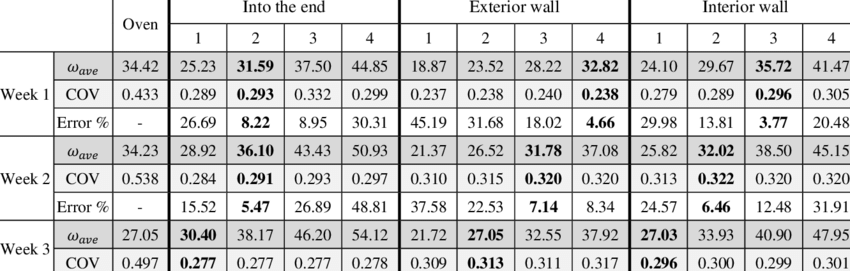
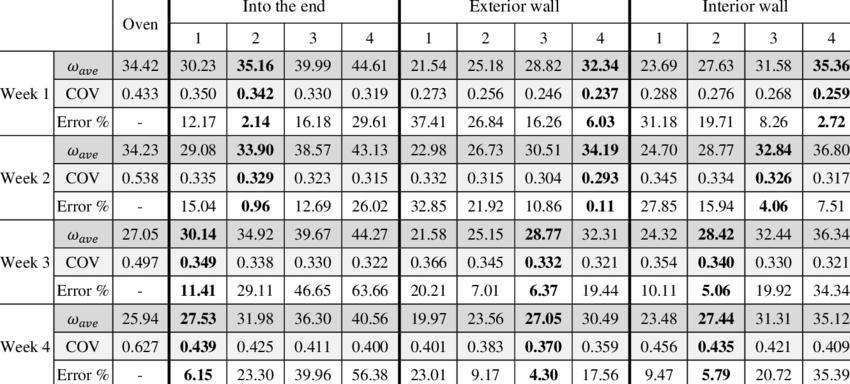
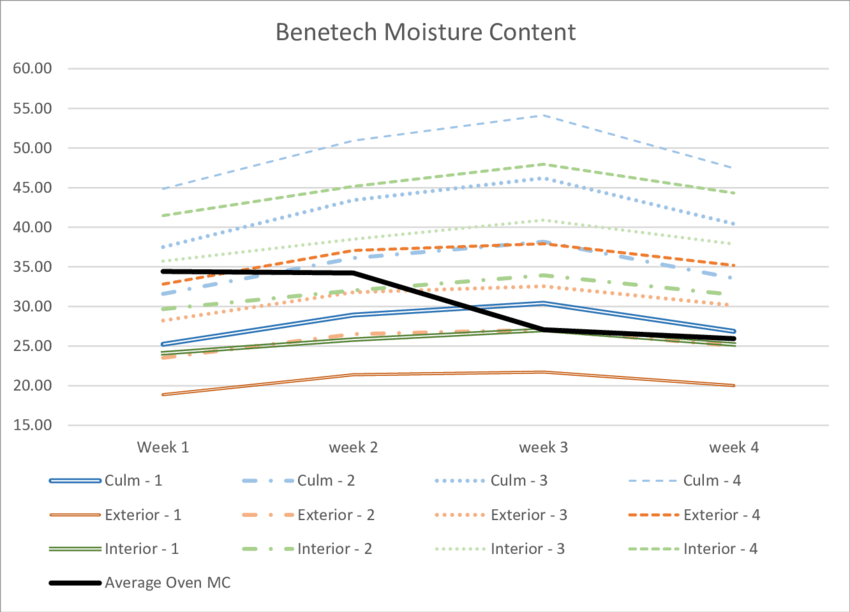
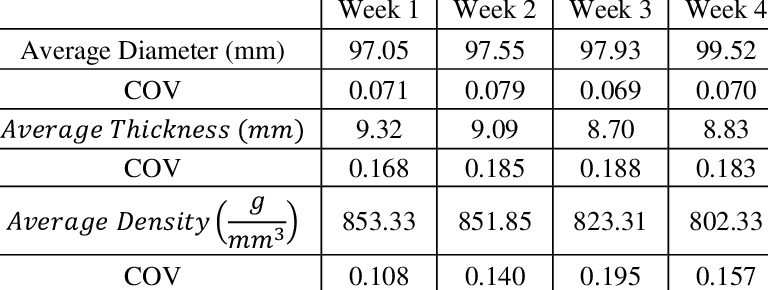
The moisture content of bamboo is critical to its treatment and use. However, determining the moisture through oven drying is impractical for most applications. Moisture meters however are able to estimate the moisture content almost instantaneously. In this study, two moisture meters, Benetech GM610 and Brookhuis FMC were calibrated for two bamboo species: Bambusa Vulgaris and Bambusa Blumeana. The tests were done on dry Bambusa Blumeana and Vulgaris, and green Bambusa Blumeana. It was found that dry bamboo could be accurately measured using these devices, while for green bamboo the results were inconclusive.

Figures

Adoption of Grading Practices According to ISO 166242018 for Bambusa Blumeana in the Philippines a Case Study

Authors

Ray Villanueva, Kawayan Collective Bamboo Treatment Facility
Luis Felipe López, Base Bahay Foundation Inc.
David J A Trujillo, Coventry University
Marlon Tanilon, Foundation University, Dumaguete City, Philippines
Clint Absin, Foundation University
Kate Tubog, Foundation University, Dumaguete City
Oman Krish Tubat, Foundation University, Philippines, Dumaguete

Abstract

ISO 19624:2018 is the world’s first international bamboo grading standard. It contains few prescriptive clauses and is mostly written as a recipe for a national grading standard. This paper reports the initial phases of the implementation of this standard in the context of a production plant (Kawayan Collective) exploiting Bambusa blumeana harvested in The Philippines. The team undertook the initial evaluation (i.e. characterization) of B. blumeana harvested from six sites. 123 culms were geometrically and mechanically characterised, as required by ISO 19624. Current visual grading rules used at Kawayan Collective have been recorded as well as their associated rejection rates and resulting associated cost of this rejection. Early findings from the initial evaluation are discussed.

Figures