Tag: Material Characterization

Establishing the Strength Parameters Parallel to Fiber of Dendrocalamus asper (Giant Bamboo)

Authors

Anika De Jesus, De La Salle University
Lessandro Estelito O. Garciano, De La Salle University
Luis Felipe López, Base Bahay Foundation Inc.
Diane Megan Co Ong, De La Salle University
Ma Chrissel Paula Roxas, De La Salle University
Mikhaela Andrea Isidro Tan, De La Salle University
Richard De Jesus, De La Salle University

Abstract

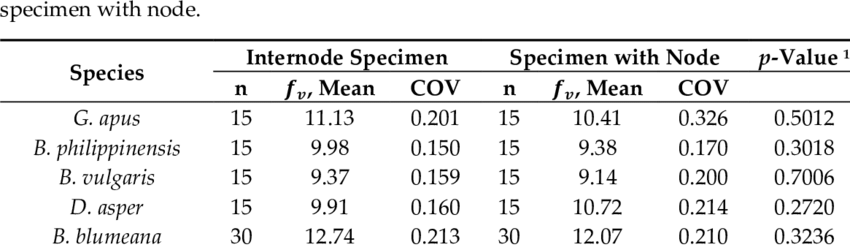
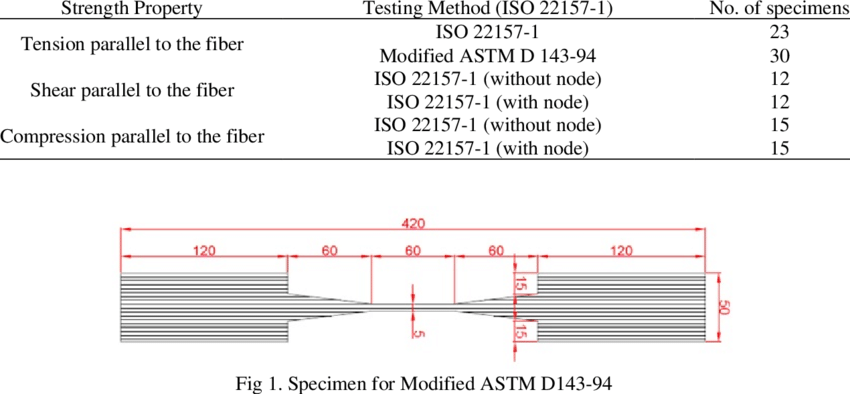
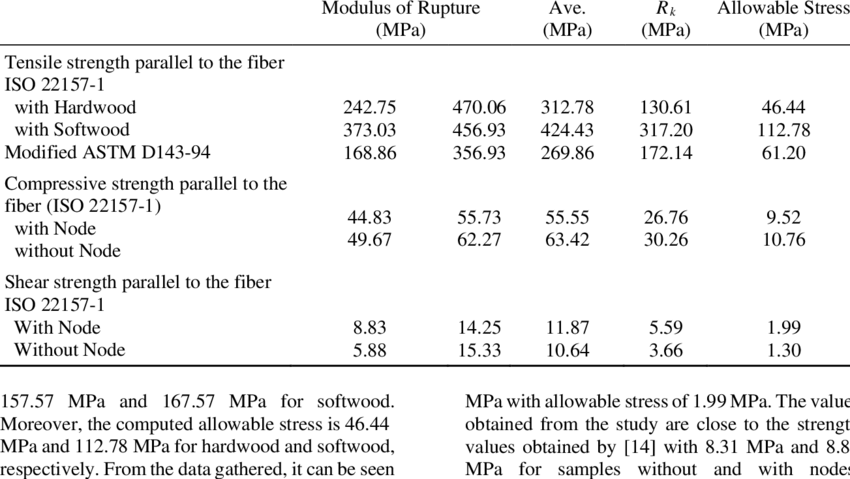
The supply of timber is becoming scarce in the Philippines. Dendrocalamus asper (or giant bamboo) is a candidate for safe, sustainable, and low-cost alternative housing to timber. However, its mechanical properties are yet to be established. In this paper, the compressive strength, shear strength, and tensile strength parallel to the fiber of Dendrocalamus asper are determined using ISO 22157 and ASTM D143 tests. For the latter, a slight modification of ASTM D143 was employed. The result yielded an improved tensile strength parallel to fiber. The tensile strength was also tested using a modified version of ASTM D143, wherein the length of the test piece was changed to ensure failure within the gauge length. Two hundred (200) samples of 2m-long Dendrocalamus asper (giant bamboo) poles were prepared and used for testing. Equipment was fabricated to the dimensions of the test sample. The obtained tensile strength parallel to fiber using the ISO 22157 method had an average strength of 312.78 MPa for specimens with attached hardwood tabs and 424.43 MPa for specimens with attached softwood tabs while with the Modified ASTM D143-94 method, the average strength was 269.86 MPa. The shear strength parallel to the fibers had an average strength of 10.64 MPa at the internode and 11.87 MPa at the node. Lastly, the compressive strength parallel to the fibers had an average strength of 63.42 MPa at the internode and 55.55 MPa at the node.

Figures

Assessment of testing protocols for bamboo for tension parallel to the fiber

Authors

Martin Aldrin De La Cruz, De La Salle University
Luis Felipe López, Base Bahay Foundation Inc.
Richard De Jesus, De La Salle University
Lessandro Estelito O. Garciano, De La Salle University

Abstract

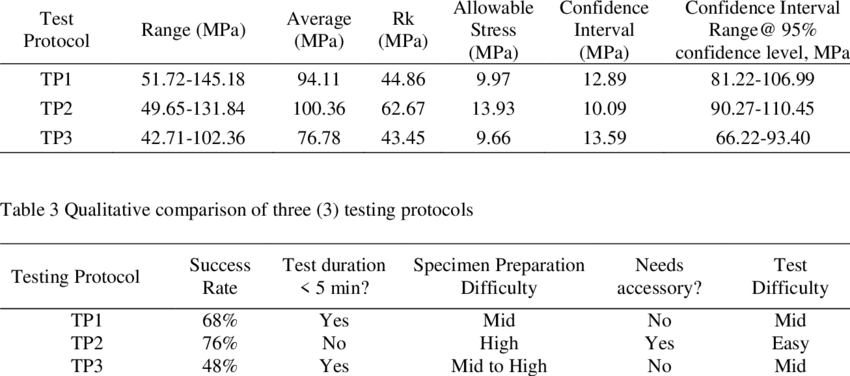
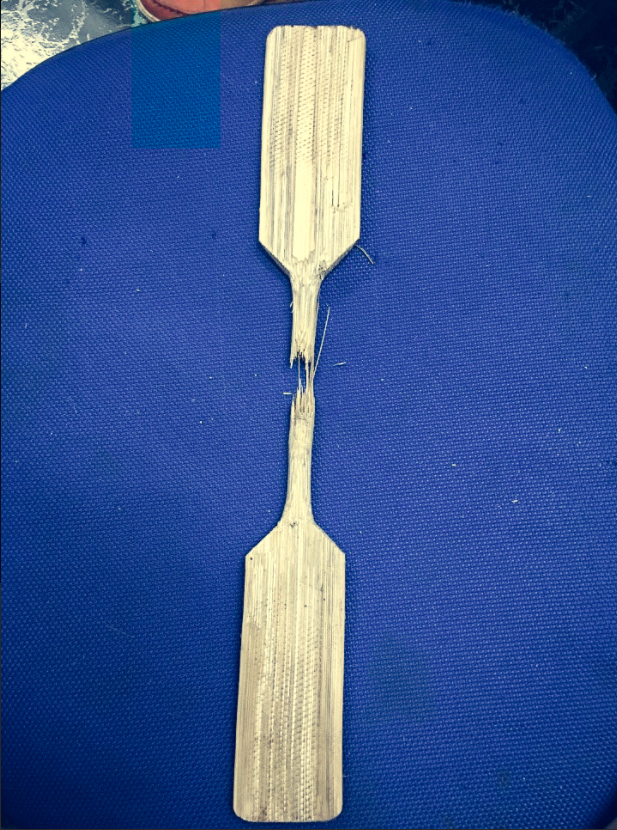
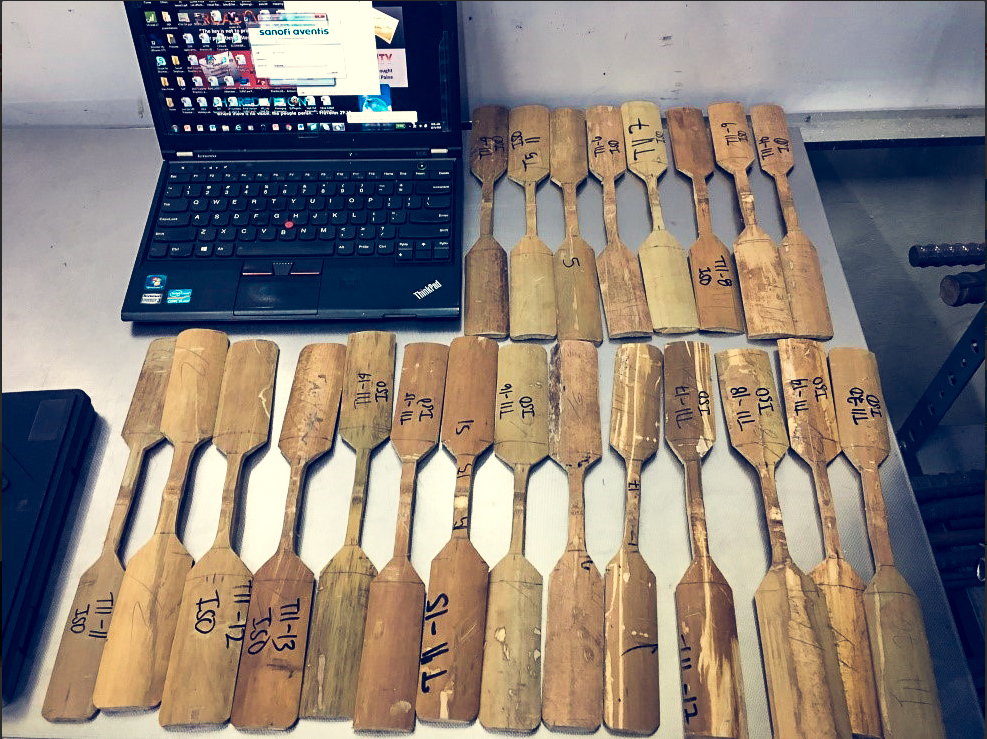
To determine tension parallel to fiber properties of Bamboo, one can employ ISO 22157. However, several studies highlighted some challenges in using the method such as premature failure of testing due to force at clamping and slipping failure at the grips. Hence, this study aimed to look for a solution to address these challenges. This study investigated, both qualitatively and quantitatively, three testing protocols in determining bamboo’s tensile strength parallel to fiber-(1) ISO 22157, (2) a modification of ASTM D143, and (3) Pittsburgh Method. The success rate, test duration, load rate and transmission, specimen preparation, equipment fabrication, and execution of the three protocols were compared. The physical properties of bamboos, such as moisture content, density, and shrinkage, were also measured in the study. The results of the study showed that the modified ASTM D143 test is the most viable method to use in testing the tensile strength parallel to fiber of bamboos. Modified ASTM D143 produced the highest tensile strength with value equal to 100.36 MPa, compared to specimens tested under ISO 22157 with tensile strength only reaching 94.11 MPa, while Pittsburgh Test produced the lowest tensile strength of 76.78 MPa. Modified ASTM D143 also yielded the lowest confidence interval which implied good consistency. Modified ASTM D143 is the recommended test protocol based on the results of this study as it gained the highest success rate during testing, lowest testing duration, and the easiest to execute.

Figures

Investigation of an alternative testing protocol to determine the shear strength of bamboo parallel to the grain

Authors

Gabrielle Luisa De Guia Cantos
Luis Felipe López, Base Bahay Foundation Inc.
Richard De Jesus, De La Salle University
Corinna Salzer

Abstract

The common testing protocol to determine the shear strength of bamboo parallel to grain is ISO 22157. However, widely documented limitations of this test procedure calls for an alternative testing protocol. This study compared ISO 22157 (TP1) and 2 alternative testing protocols proposed by Base Bahay (TP2a and 2b) in determining shear strength of bamboo parallel to grain. The study used a local bamboo known as “kawayang tinik” (Bambusa blumeana). Results showed that TP1 produced more pure shear failures at 65% compared to TP2a and TP2b at 55% each. Shear strength values between the three methods were not significantly different, although, TP2b resulted in the lowest coefficient of variation at 18%. Also, TP2b was found to be the most effective in terms of specimen preparation, ease of assembly of testing equipment, and low variability in data.

Bamboo Material Characterisation

Authors

David J A Trujillo, Coventry University
Luis Felipe López, Base Bahay Foundation Inc.

Abstract

This chapter serves to summarise the state of the art in the process of material characterisation of bamboo for structural purposes. It also seeks to outline the key characteristics a bamboo researcher or engineer would need to identify for this purpose. The morphological and anatomical characteristics of the bamboo culm are briefly presented. Trends observed by researchers in terms of the effects of density, age, and moisture content on strength and stiffness are presented, as well as the variation of these along the bamboo culm. The importance of considering geometrical in characterisation, as well as physical and mechanical properties, are discussed. Testing procedures and standards are presented to the reader and critically appraised. Published values for Guadua Angustifolia are reported for reference. A process of deriving design values from experimentally derived values is discussed. Suggestions for further research are presented.
Figures

Exploratory Study Of The Glued Laminated Bamboo Guadua Angustifolia As A Structural Material (Estudio Exploratorio De Los Laminados De Bambú Guadua Angustifolia Como Material Estructural)

Authors

Luis Felipe López, Base Bahay Foundation Inc.
Juan F. Correal, Los Andes University (Colombia)

Abstract

An exploratory study, conducted at Universidad de los Andes in Bogotá, Colombia, on the potential use of glued laminated bamboo guadua (Guadua Angustifolia Kunt) as a structural material is presented in this paper. The influence of the direction of the fiber and the location of the laminae in the mechanical properties is discussed. The compression, tension, shear, and flexural design stresses of glued laminated guadua are compared to those of Andean structural woods (lumber). Additionally, the effect on the mechanical properties of the bond strength of the adhesive at different test temperatures is investigated. Based on the mechanical properties obtained in this research, glued laminated guadua bamboo can be a suitable construction material for structures.