Tag: Sustainable Housing

What Makes Bamboo a Good Alternative Construction Material?

Bamboo has been rising in popularity as a sustainable construction material due to its versatility. Compared to other materials such as concrete, steel and timber, bamboo is an organic material that can be easily cultivated and harvested in a short time and can be immediately utilized. 

The tensile strength of a bamboo fiber is even two to three times stronger than that of steel. This is one of the many reasons why the design and construction sector around the world find bamboo as a great construction alternative. It is not only affordable but also sustainable. Learn more on why bamboo is a great building material:

Strength and Durability

Bamboo has a high tensile and compressive strength and can withstand heavy loads and extreme weather conditions. It has a higher strength to weight ratio than other conventional materials. An average Bambusa Blumeana can resist 10-15 tons of compression. If properly used and treated, it is also resistant to pests, rot, and decay, making it a durable and long-lasting material. 

Cost-effectiveness

Bamboo is considered a cost-effective material due to its fast growth rate, low maintenance requirements, and versatility in product applications. The production costs of bamboo products can be lower than for products made from other materials because bamboo requires minimal inputs and can be processed using simple techniques. Because bamboo is lightweight and grows in many regions around the world, transportation costs for bamboo products can be lower. Bamboo’s versatility in product applications can also increase its economic value, making it a cost-effective and sustainable alternative to traditional building materials and other products.

Eco-friendly material

Bamboo is a renewable resource that grows quickly and can be harvested without causing damage to the environment. Bamboo has a unique ability to absorb and store carbon dioxide from the atmosphere, making it an effective tool in mitigating climate change. Based on studies, bamboo can sequester up to 35% more carbon than other types of trees and plants. It is a sustainable alternative to traditional building materials like concrete and wood that has a lower carbon footprint and is more energy-efficient than these materials.

It requires no maintenance

Bamboo requires little to no maintenance because it has a rapid growth rate, is drought-tolerant, has natural defenses against pests and diseases when growing, and is able to self-regenerate after harvest. These characteristics make bamboo a low-maintenance crop that can provide a sustainable source of materials and income for communities.

High demand is no problem

One of the benefits of bamboo is that it can be easily restocked. Bamboo is also the fastest-growing plant on earth. Bamboo species like Dentrocalamus Asper, Guadua, and Bambusa Blumeana grow 20 cm, 15 cm, and 17 cm per day respectively.

Compared to hardwood trees which can take 30 to 50 years to reach a harvestable age, most bamboo only take about three or four years to reach full maturity. This means that there is an abundant supply of bamboo to sustain the needs of the construction industry.

Aesthetics

Bamboo has a unique and attractive appearance that can enhance the visual appeal of a building. It can be used in various ways, such as structural elements, flooring, wall cladding, and roofing. When used in construction, bamboo can create a warm and natural look that complements many architectural styles.

The Future of Bamboo as a Building Material

Due to its affordability and sustainable components, bamboo is definitely a great alternative for contemporary construction. Due to its environmental features, coupled with the integration of advanced technologies and prefabrication techniques, bamboo is poised for a promising future.

Base Bahay Foundation, Inc (BASE) is the pioneer of Cement-Bamboo Framework in the Philippines. BASE builds affordable and disaster-resilient structures using bamboo-based technology. Through continuous research in the Base Innovation Center (BIC), BASE is optimizing the technology and looking for new applications outside its standard model. BASE also offers training courses under its Bamboo Academy program to share the alternative building technologies and provide further knowledge on bamboo construction. Learn more about BASE projects and initiatives!

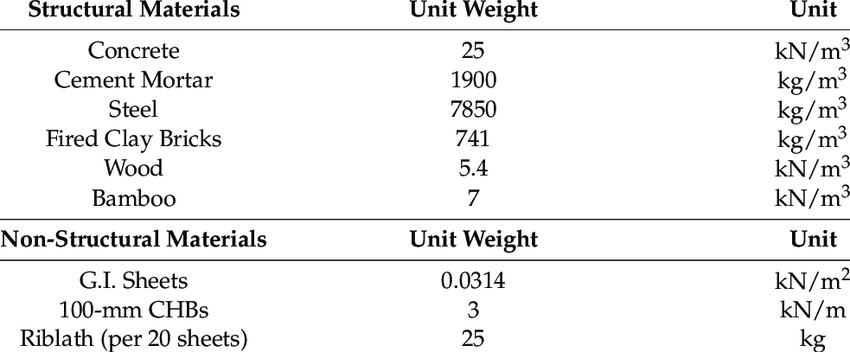
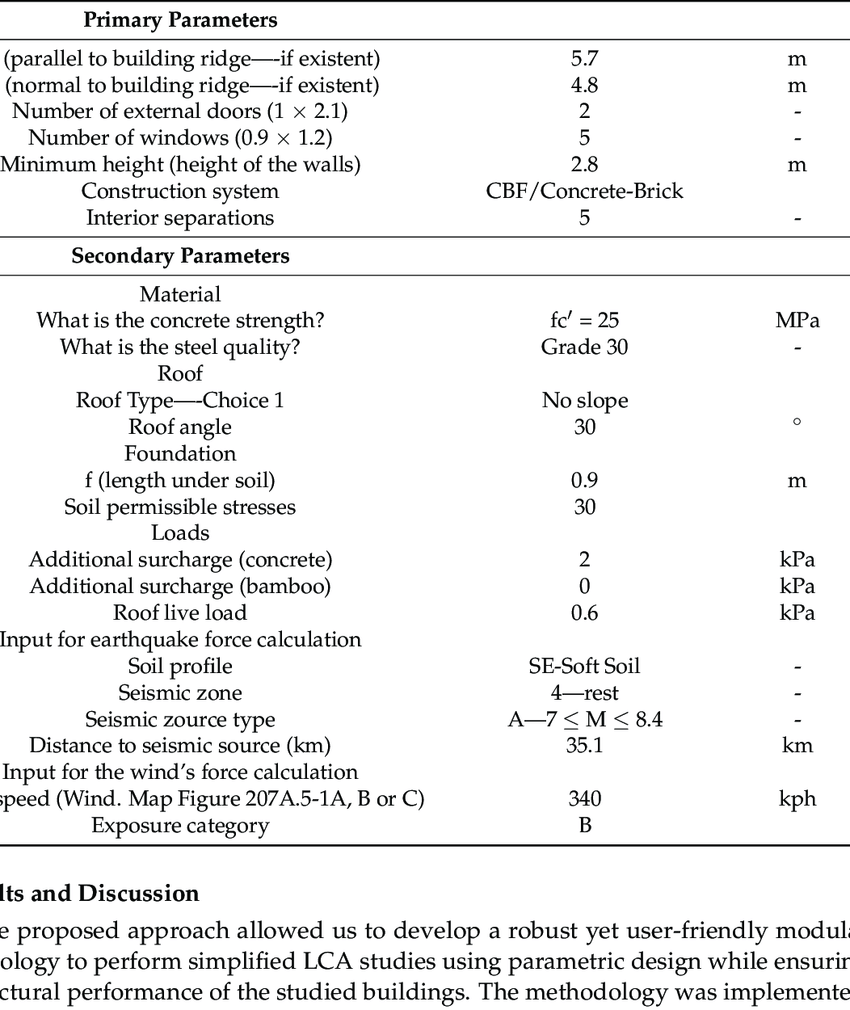
Parametric Approach to Simplified Life Cycle Assessment of Bamboo Frame Buildings

Authors

Eleni Eleftheriou, ETH Zurich
Edwin Zea Escamilla, ETH Zurich
Guillaume Habert, ETH Zurich
Luis Felipe López, Base Bahay Foundation Inc.

Abstract

The provision of sustainable housing solutions is one of the main challenges in emerging economy countries. Furthermore, it is clear that a sustainable solution should be based on renewable bio-based materials. The scientific and practical evidence clearly suggests that the use of bamboo in the provision of housing solutions not only brings environmental but also socio-economic benefits to the communities using these strategies. One barrier to the promotion of this type of solution is the lack of knowledge of its structural design and environmental performance. Moreover, the access to assessment tools and methodologies to carry out such assessments is limited. Life Cycle Assessment (LCA) is widely recognized as the most appropriate method to calculate environmental impacts through a product’s life cycle. LCA is methodologically described on the ISO series 14040 and proposes an input-output relationship between the environment and human activity. LCA has been used in research with many case studies focusing on the built environment and especially on buildings. Nevertheless, the practical application of LCA is very limited, especially in the affordable housing sector. Two main reasons had been identified, first, the development of LCAs is data and time intensive and second, the cost of software or third-party assessment makes the implementation of LCA on affordable housing projects unviable. The use of simplified LCA has shown great potential to solve these challenges but the generation of life cycle inventory data remains the main issue hindering its implementation of user-friendly tools. In this paper, we describe the development of a methodological approach to using parametric design to generate the data required to carry out a simplified life cycle assessment of bamboo-based buildings. Moreover, we present a case study assessing a housing unit using cement-bamboo frame technology developed by the NGO Base-Bahay in the Philippines. From these experiences, it can be concluded that parametric design is a valid approach to overcoming the main identified challenges. In addition, this approach requires further development to cover additional design features like wind, earthquake, and soil quality demands. With this work, we show that the complexity of LCA can be reduced. Finally, the use of parametric approaches enables the development of cost-effective solutions that can increase access to this kind of assessment in the affordable housing sector.

Figures

Knowledge Gaps and Research Needs in Bamboo Construction

Authors

Kent Harries, University of Pittsburgh
Amir Mofidi
John Naylor, Newcastle University
David J A Trujillo, Coventry University
Luis Felipe López, Base Bahay Foundation Inc.
Mateo Gutierrez
Bhavna Sharma, University of Southern California
Chase Rogers, University of Pittsburgh

Abstract

In November 2021, a symposium was held to identify knowledge gaps, research needs, and priorities in the bamboo community. Participants were asked to complete a post-symposium survey on research gaps, needs, and priorities. Both rank-order and open-ended questions were asked covering the broad areas of i) determination of material properties, testing, and grading; ii) bamboo connection techniques and technology; iii) bamboo durability and fire performance; and, iv) construction using engineered bamboo. This paper reports the survey and its results. The subsequent discussion identifies priorities for future research that can be leveraged to move the use of bamboo in construction forward. INTRODUCTION In November 2021, a symposium-Bamboo in the Urban Environment IV-was held to identify knowledge gaps, and research needs and priorities as perceived by the bamboo community. The symposium attracted 240 unique participants (Table 1) who were asked to complete a post-symposium survey on research gaps, needs, and priorities. 42 responses (18%) were received representing a range of stakeholders from at least 12 countries. Both rank-order and open-ended questions were asked covering the broad areas of i) determination of material properties, testing, and grading; ii) bamboo connection techniques and technology; iii) bamboo durability and fire performance; and, iv) construction using engineered bamboo. This paper reports the survey and its results. The co-authors include the Symposium organizers and facilitators of each session (Table 1). The objective of the symposium and survey was to identify priorities for future research that can best be leveraged to move the use of bamboo in construction into the mainstream.

Fire Resistance for Low-Rise Housing in the Tropics: Test Results for Bamboo-Based Construction Systems

Authors

Corinna Salzer
Holger Wallbaum, Chalmers University of Technology
Lily Tambunan, Bandung Institute of Technology

Abstract

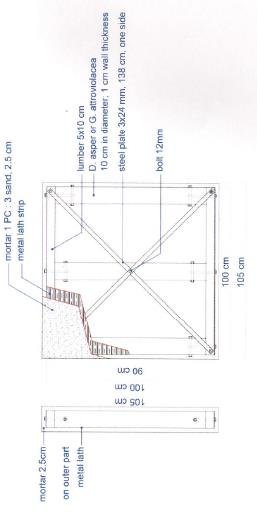
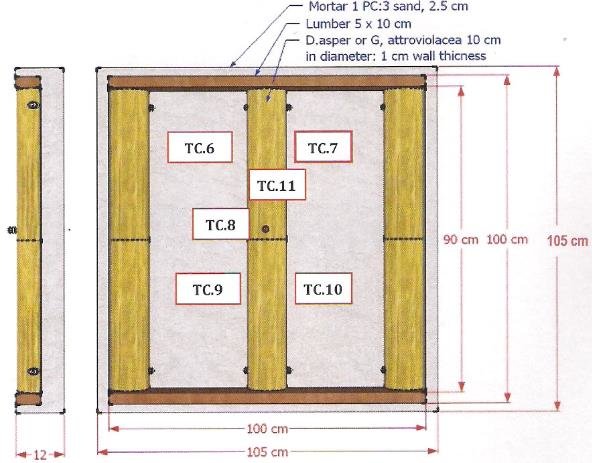
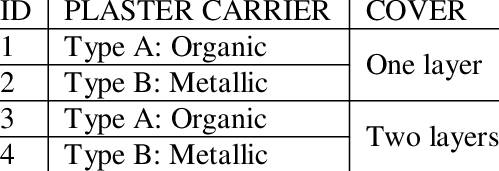
The use of round bamboo as load bearing member for low-rise housing is an interesting alternative construction method for tropical regions. Similar to timber engineering, predictable fire resistance is a requirement for its legal approval and application at scale. The research presents fire test results on selected bamboo-based construction systems developed in Asia-Pacific and Latin America. Tests were conducted in Indonesia according to the National Standard SNI 1741, which is referring to ISO 834-1 and JIS A 1304. Different bamboo wall cross-sections were tested in specimens of 1050mm by 1050mm and evaluated according to insulation, integrity, and mechanical resistance criteria. All specimens received a rating of 60 minutes resistance. The research provided a general understanding of the system response and highlighted critical variables of the wall system, which can be transformed into design recommendations.

Figures

Parametric Approach to Simplified Life Cycle Assessment of Social Housing Projects

Authors

Eleni Eleftheriou
Luis Felipe López, Base Bahay Foundation Inc.
Guillaume Habert, ETH Zurich
Edwin Zea Escamilla, ETH Zurich

Abstract

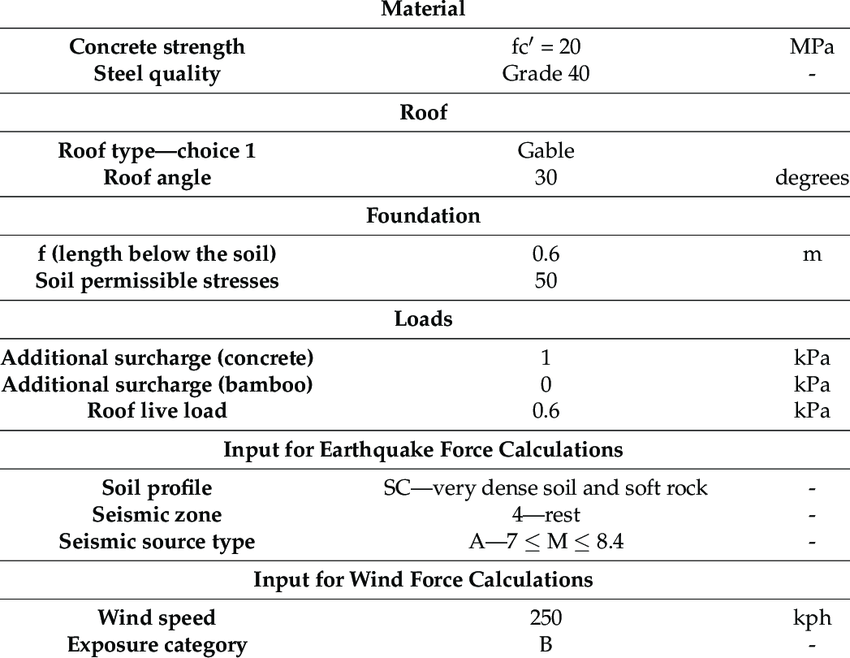
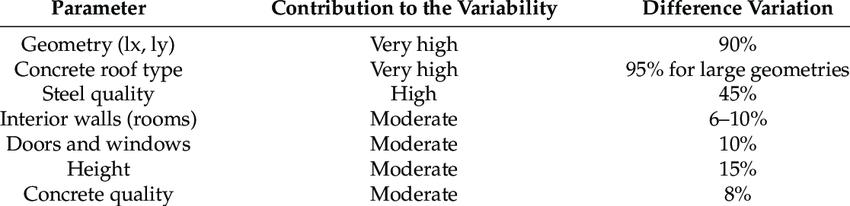
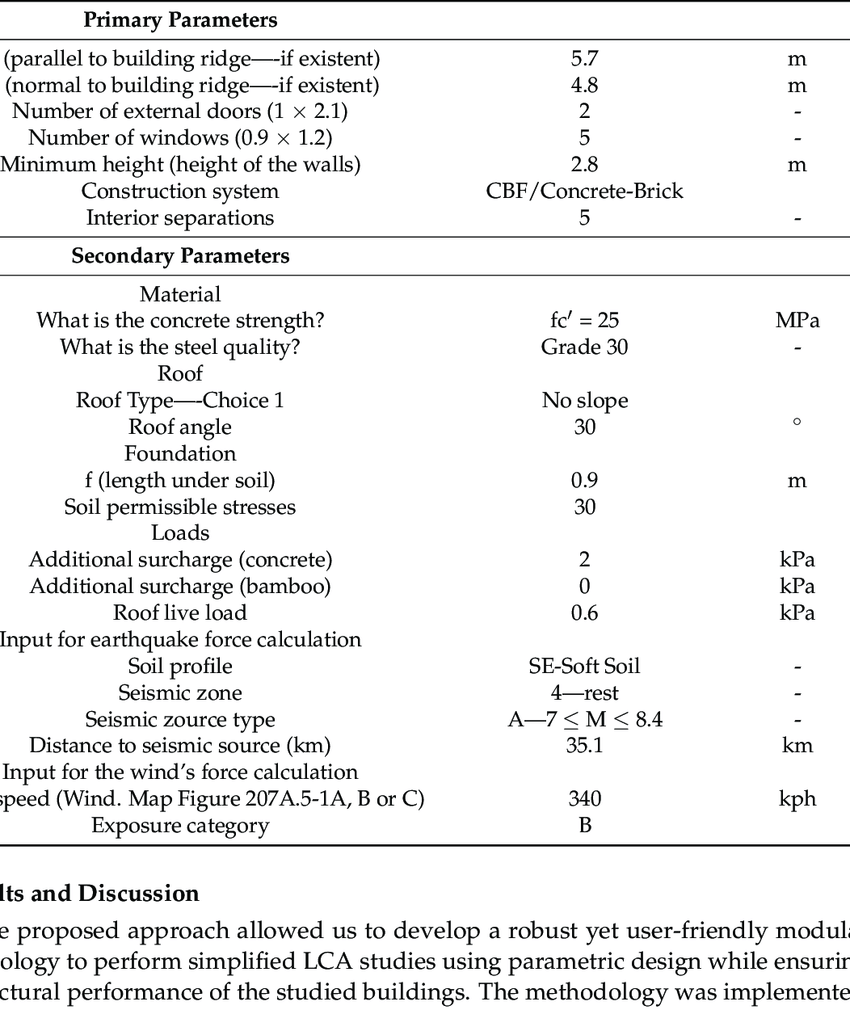
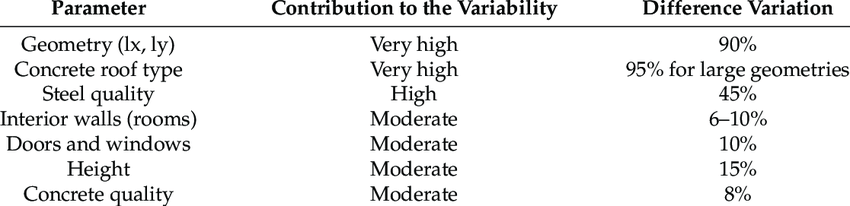
The provision of sustainable housing solutions is one of the main challenges in emerging economy countries. Furthermore, it is clear that a sustainable solution should be based on renewable bio-based materials. Scientific and practical evidence clearly suggests that the use of bamboo in the provision of housing solutions provides communities with both environmental and socioeconomic benefits via this strategy. One barrier to the promotion of this type of solution is the lack of knowledge of structural design and environmental performance. Moreover, access to assessment tools and methodologies is limited. The use of simplified Life Cycle Assessment (LCA) has exhibited great potential to increase accessibility, but the generation of life cycle inventory data remains a major issue. In this paper, we describe the development of a methodological approach to using parametric design to generate the data required to carry out simplified LCA of social housing solutions. Moreover, we present a case study assessing a housing unit using cement bamboo frame technology developed by the Base Bahay Foundation in the Philippines. The main parameters for the LCA of the buildings were identified through sensitivity analysis. Moreover, they show that parametric design is a valid approach to overcoming the challenges of data generation at the early stages of design. The proposed approach would enable users without civil and/or engineering backgrounds to carry out simplified LCA calculations. Thus, through methodological approaches, it is possible to reduce significantly the complexity associated with LCA and open new avenues for its application.

Figures

Determining Material Suitability for Low-Rise Housing in the Philippines: Physical and Mechanical Properties of the Bamboo Species Bambusa Blumeana

Authors

C. Salzer
Holger Wallbaum, Chalmers University of Technology
Marina Alipon
Luis Felipe López, Base Bahay Foundation Inc.

Abstract

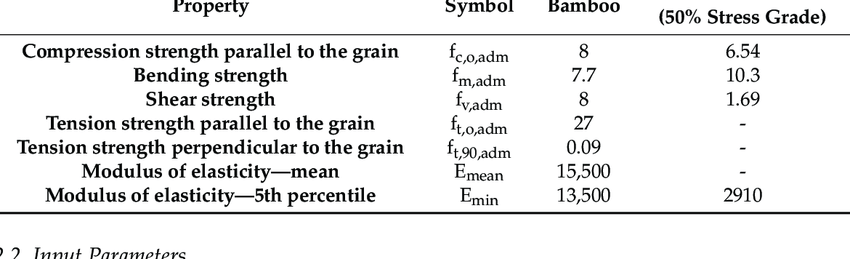
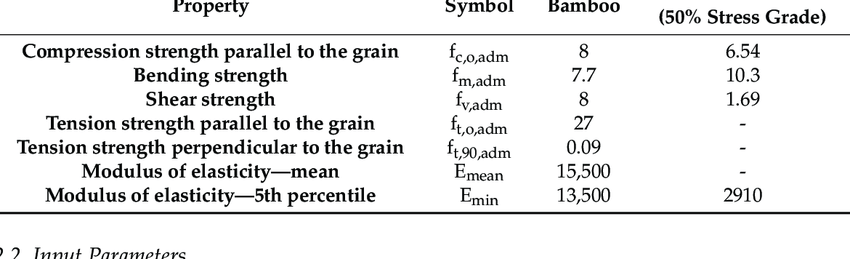
The use of cellulosic materials in the construction of low-rise housing in tropical climates has great potential. Bambusa blumeana (B. blumeana, J.A. and J.H. Schultes), the most abundantly available bamboo species in the Philippines, is a promising alternative material for the construction of cost-efficient buildings. However, to comply with municipal rules and regulations for construction, a comprehensive understanding of the organic raw material is needed to permit its application as a load-bearing structural member. In this study, the physical and mechanical properties of B. blumeana bamboo from a typical growth region of the Philippines were tested according to ISO 22157-1 (2004) and ISO 22157-2 (2004). The characteristic strength values of B. blumeana were as follows: compressive and tensile strengths parallel to the grain of 20 and 95 MPa, respectively; shear strength of 5 MPa, bending strength of 34.6 MPa, and the mean and fifth percentile modulus of elasticity of 13100 and 8600 MPa, respectively. Based on these results, a recommendation for permissible stresses for structural design was made in line with ISO 22156 (2004).

Figures